UNI-T UTx318 Thermal Monocular for Outdoor Detection
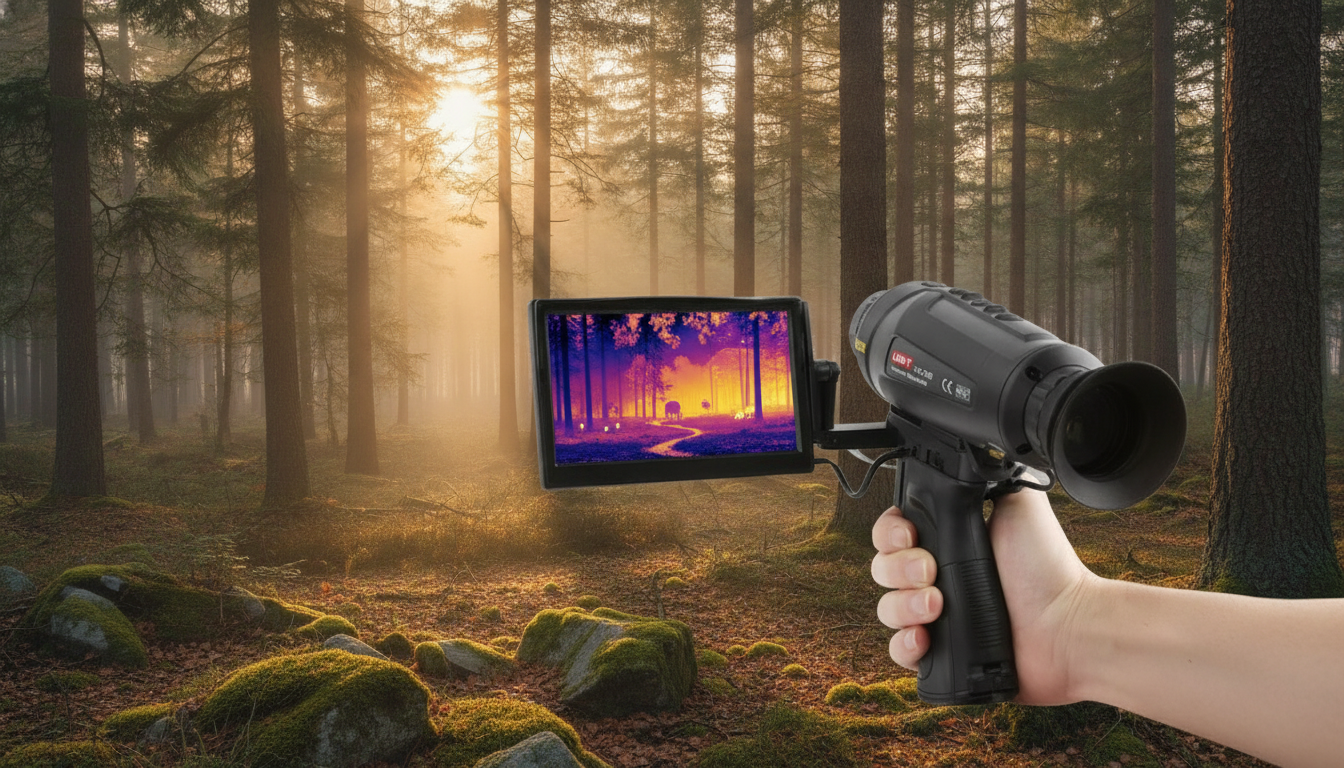
Why Thermal Imaging Changes Outdoor Observation
Thermal imaging adds a new layer to outdoor awareness by showing heat signatures instead of relying on reflected light. That means you can spot warm-blooded animals, people, and recently warmed objects after sunset, in heavy shadow, and in many low-visibility situations where traditional optics struggle. Built for practical field carry and quick scanning, the UNI-T UTx318 Thermal Imaging Monocular – Your Ultimate Outdoor Observation Tool fits into real outdoor routines: sweep a treeline, confirm what you’re seeing, then decide whether to approach, avoid, or keep monitoring.
Thermal isn’t magic—it won’t read a distant trail sign like a daylight optic, and it won’t “see through” solid barriers. But when the environment and timing are right, thermal contrast can help you detect movement and living targets sooner, giving you more time and space to make good decisions.
What Thermal Imaging Helps You See Outdoors
Thermal imaging shows temperature differences. In the field, that often translates into clearer detection of living targets against cooler backgrounds like rocks, open fields, or water edges—especially in the hours before sunrise or after sunset. It’s also useful for brief “perimeter checks” around a campsite or for scanning uneven terrain when visible light is limited.
- Heat signatures instead of reflected light, useful after sunset, in shadows, or under overcast skies
- Higher contrast for people and animals against cooler natural backgrounds
- Early detection while hiking or setting up camp—spot movement before it’s close
- Different from night vision: thermal can detect warm objects partially obscured by light vegetation, but cannot see through walls or solid objects
- Most effective when temperature differences are larger (cool nights, early mornings, winter)
For a helpful overview of how thermal differs from night vision in practical use, FLIR’s explanation is a solid starting point: Thermal vs Night Vision.
Thermal Imaging vs Night Vision for Outdoor Use
| Use case | Thermal imaging monocular | Night vision (IR/low-light) |
|---|---|---|
| Tracking wildlife at night | Highlights animals by heat signature even in low/no light | Depends on ambient light/IR illuminator; can be washed out by glare |
| Light fog/smoke/haze | Often maintains usable contrast | Image can degrade significantly depending on conditions |
| Reading signs/maps | Not ideal for fine text detail | Usually better for detail and navigation cues |
| Detecting people in darkness | Strong for detection and awareness | Can be good, but relies on lighting and scene conditions |
| Battery/brightness discipline | Doesn’t require visible light; screen glow still needs care | IR illuminator can reveal position; display glow still applies |
UNI-T UTx318: Field-Use Highlights to Look For
A monocular thermal tool earns its keep when it’s quick to deploy, comfortable to hold, and easy to operate under real outdoor constraints. The UNI-T UTx318 is designed around a one-handed scanning workflow—useful when the other hand is occupied with trekking poles, a leash, or a standard flashlight.
- Monocular form factor for one-handed scanning while keeping the other hand free
- Built for an outdoor observation rhythm: quick scan, confirm, then decide what to do next
- Works across multiple roles: wildlife observation, property checks, campsite perimeter awareness, and basic search support
- Ergonomics matter in the field: glove-friendly controls and fast access to core functions reduce fumbling
- Higher-end thermal tools are often chosen for reliability, clearer identification at distance, and less eye strain during long scanning sessions
If your goal is serious night or low-visibility detection rather than occasional novelty use, start with the dedicated option: UNI-T UTx318 Thermal Imaging Monocular – Your Ultimate Outdoor Observation Tool.
Common Outdoor Scenarios and How to Use It Well
Wildlife observation
Trail and campsite awareness
Water edges and wetlands
Expect thermal reflections and sharp temperature gradients around shorelines. Confirm targets with movement and silhouette, especially when the water surface is warmer or cooler than the air. Weather can amplify these effects; NOAA’s fog guide explains why visibility shifts quickly near water and low terrain: NOAA National Weather Service: Fog.
Cold-weather advantage vs hot-weather reality
What to Check Before Buying (So It Matches Your Use Case)
- Detection vs identification: detection is noticing “something warm”; identification is confidently knowing what it is. Your distance expectations should match your goal.
- Comfort for long sessions: screen clarity, diopter adjustment, and balance affect fatigue during extended scanning.
- Power strategy: consider battery life, charging method, and whether topping up from a power bank fits your trip style.
- Weather and handling: prioritize durability for real carry—bumps, dust, and moisture exposure happen outdoors.
- Rules and ethics: confirm regulations if the intended use includes hunting or other regulated activities. A reliable starting point is the U.S. Fish & Wildlife Service directory: State hunting regulations.
Care, Storage, and Everyday Handling
When a Different Observation Tool Makes More Sense
- Stargazing and distant celestial targets: for magnification and fine detail, a dedicated telescope is the better match, such as the 200/2400mm High-Power Astronomical Telescope for Stargazing Enthusiasts.
- Long sit-and-watch sessions: comfort and stability matter. If you’ll be glassing from a fixed spot for extended periods, a supportive seat can reduce fatigue, like the Elegant Ebony Genuine Leather Rocking Chair.
- Mixed-use kits: thermal for detection and awareness, then optical magnification for daylight detail confirmation.
FAQ
Can a thermal monocular be used in complete darkness?
Yes. Thermal imaging detects heat rather than visible light, so it can work in total darkness, though performance still depends on temperature contrast and weather conditions.
Does thermal imaging work through glass or windows?
Typically no. Standard glass blocks long-wave infrared, so the device usually shows the temperature of the glass surface rather than what’s behind it.
What’s the difference between detecting and identifying a target?
Detection is noticing a heat signature, while identification is confidently determining what it is. Identification generally requires better resolution, optics, and a closer distance.














Leave a comment