Toddler Nightmares: Comfort Scripts & Bedtime Fixes

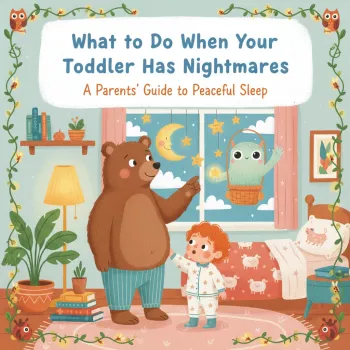
What to Do When Your Toddler Has Nightmares: Practical Comforting Tips and Bedtime Solutions
Nightmares can feel dramatic at toddler age—tears, clinging, and a sudden fear of sleep. The goal is to help a child feel safe in the moment, reduce repeat wake-ups, and build a bedtime routine that lowers anxiety over time. This guide organizes what to do right after a nightmare, what to say (and what not to), and how to set up calmer nights—plus signs that it’s time to ask a pediatrician for help.
Nightmares vs. night terrors: why the difference matters
Not all “scary nights” are the same, and responding the right way can shorten the episode and prevent extra wake-ups.
- Nightmares usually happen in the second half of the night. Your child often wakes fully, can be comforted, and may remember a “bad dream” or scary images.
- Night terrors often happen earlier in the night. A child may scream, look panicked, and be hard to wake—but typically won’t remember anything in the morning.
- Nightmares respond well to soothing, reassurance, and a consistent return-to-bed plan. Night terrors are often best handled by keeping your child safe and waiting it out.
- If episodes include sleepwalking, dangerous behavior, or frequent night terrors, consider discussing patterns with a clinician.
For additional background on children’s sleep and nightmares, see resources from HealthyChildren.org (American Academy of Pediatrics) and the National Sleep Foundation. For night terrors specifically, the NHS overview is a helpful plain-language reference.
The first 5 minutes after a nightmare: a calm, repeatable script
The fastest way back to sleep is usually the least exciting one. Aim for “steady and safe,” not “big and distracting.”
- Check safety and orient gently: Use a soft voice, dim light, and a slow approach to reduce adrenaline.
- Offer simple validation: “That was scary. You’re safe. I’m here.” Skip long explanations in the moment.
- Use steady body cues: A hand on the back, a brief cuddle, or 10 slow breaths together. Keep comfort predictable rather than intense.
- Keep the room boring: Bright lights, screens, snacks, or playtime can accidentally reward wake-ups and make resettling harder.
- Return to bed with a short routine: Sip of water, quick bathroom trip if needed, then back under covers with one comfort item.
What to say (and what to avoid) when a toddler is scared
Toddlers don’t need a perfect speech; they need repeated cues that the adults are calm and the space is safe.
- Use concrete reassurance: “I checked—your room is safe,” and “Mom/Dad is right outside.”
- Name feelings without amplifying fear: “Your heart is beating fast because you got scared,” rather than confirming monsters are real.
- Avoid shaming or logic battles: “There’s nothing to be scared of” can feel dismissive; comfort usually comes before reasoning.
- Try a brief power phrase: “Safe body, safe bed,” or “Dreams can’t hurt me.” Repeat it at bedtime and after wake-ups.
- If they want to talk about the dream: Keep it short, then pivot: “That was a tricky dream. Let’s help your body feel calm again.”
Bedtime setup that prevents repeat nightmares
Nightmares can’t always be prevented, but the right setup reduces the odds of repeated wake-ups and helps a toddler feel more in control.
If sitting nearby helps your child settle without turning bedtime into a long event, a dedicated, comfortable chair can make the routine easier to repeat. Some families like a sturdy nursery-style rocker such as the Elegant Ebony Genuine Leather Rocking Chair to keep cuddles consistent and contained (rather than moving to the couch or a brightly lit room).
A simple bedtime plan: comfort without creating new sleep problems
Comfort options from least to most stimulating
| Option | When it helps | How to use it without escalating wake-ups |
|---|---|---|
| Verbal reassurance + tuck-in | Mild fear, child is mostly calm | Keep it under 60 seconds; repeat the same phrase each time |
| Hand on back / brief cuddle | Child is shaky or tearful | Count 10 slow breaths together, then stop the contact and tuck in |
| Parent sits in chair | Separation anxiety, repeated wake-ups | Set a timer; move the chair farther away every few nights |
| Scheduled check-ins | Child asks for reassurance repeatedly | Promise one check at a set interval; don’t renegotiate after leaving |
| Short reset in hallway (dim light) | Child is escalated and needs a pattern break | 30–60 seconds only; return to bed before the child feels “awake for the day” |
Common triggers to look for (and quick adjustments)
When to talk to a pediatrician or sleep specialist
A guided, step-by-step resource for tougher phases
If you want a guided approach that emphasizes consistency and emotional safety, see What to Do When Your Toddler Has Nightmares | Ebook Guide for Parents | Practical Comforting Tips & Bedtime Solutions.
FAQ
How long do toddler nightmares usually last?
Occasional nightmares often come and go, especially during big developmental phases or stressful weeks. If nightmares happen multiple times per week for several weeks, it’s a sign to tighten the bedtime routine and consider discussing patterns with your pediatrician.
Should a parent wake a toddler during a nightmare?
Nightmares usually wake a child on their own, so the focus is comfort and resettling. If it seems more like a night terror (not fully awake and hard to rouse), prioritize safety and avoid fully waking unless you need to move them out of danger.
Is it okay to let a toddler sleep in the parent bed after a nightmare?
It can be a reasonable short-term choice during illness or travel, but doing it repeatedly after nightmares can increase future wake-ups and protests. A gradual comfort plan that keeps your toddler in their own bed usually leads to calmer nights over time.















Leave a comment