Cat Grooming Routine Kit: 3-in-1 Printable Tracker Bundle
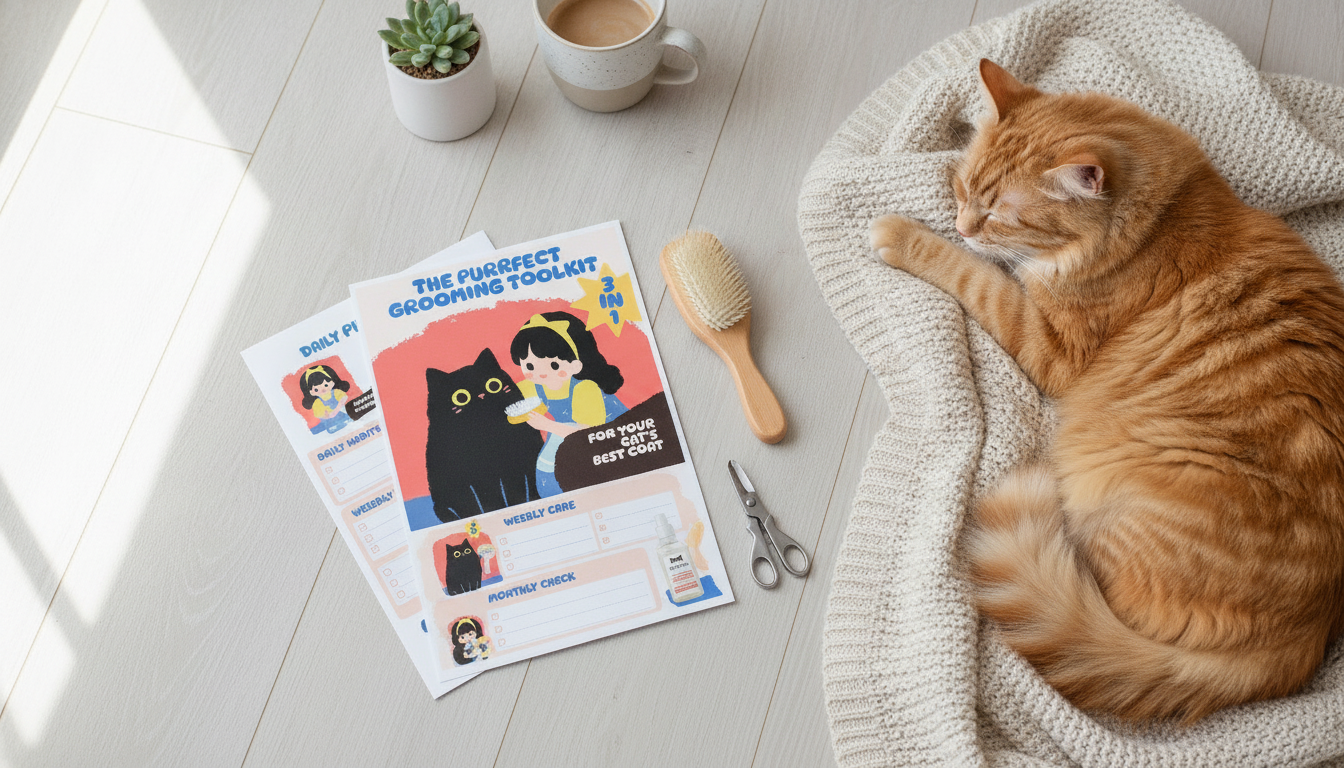
The Purrfect Grooming Toolkit for Your Cat’s Best Coat: A 3-in-1 Digital Download Bundle
A healthy, glossy coat is about more than looks—it’s comfort, skin health, and fewer hairballs around the home. This digital download bundle is designed to make grooming simple and consistent with ready-to-use guides, routines, and trackers that fit different coat types, seasons, and sensitive cats.
What’s inside the 3-in-1 digital grooming bundle
Consistency is what most grooming plans miss. Instead of guessing what to do (or doing everything at once), this bundle breaks grooming into repeatable steps you can follow in minutes and adjust as your cat’s coat changes through the year.
- Printable grooming routine sheets that break down brushing, bathing (when needed), nail care, ear checks, and dental habits into manageable steps
- Coat and skin observation checklists to spot dryness, dandruff, mats, excess shedding, or irritation before they become bigger issues
- Tracking pages for grooming frequency, tools used, reactions to products, and notes for vet or groomer discussions
- Digital-first format for quick access on phone/tablet, plus print-friendly pages for a grooming station binder
If you want a ready-to-go system you can reuse every week, start here: The Purrfect Grooming Toolkit for Your Cat’s Best Coat – 3-in-1 Digital Download Bundle.
How to match grooming to your cat’s coat and lifestyle
The best grooming routine isn’t the longest—it’s the one that fits your cat’s coat and tolerance. A short-haired cat usually needs loose hair control. A long-haired cat needs mat prevention. A senior cat may need a gentler pace and better timing.
- Short-haired cats: focus on weekly brushing for loose hair and dander control; increase during seasonal sheds
- Medium- and long-haired cats: prioritize detangling and mat prevention with frequent sessions and a consistent routine
- Senior cats or cats with arthritis: keep sessions shorter, use gentle strokes, and schedule grooming when the cat is relaxed and warm
- Indoor cats: still benefit from brushing to reduce hairballs and distribute oils; watch for dry air in winter
- Multi-cat homes: use separate grooming tools where possible to reduce cross-contamination of skin issues
Grooming focus by coat type
| Coat type | Typical challenges | Suggested routine frequency | Toolkit pages to use most |
|---|---|---|---|
| Short hair | Shedding, dander | 1–2x/week brushing; quick checks weekly | Shedding tracker, coat condition checklist, quick routine sheet |
| Medium hair | Tangles, seasonal mats | 2–4x/week brushing; checks weekly | Detangling steps, mat watchlist, routine tracker |
| Long hair | Mats, hairballs, sanitation issues | Daily to 4–6x/week brushing; checks 2x/week | Mat prevention plan, sensitive-area guidance, grooming log |
| Curly/unique coats | Uneven shedding, texture changes | 2–3x/week brushing; monitor skin | Coat notes pages, product reaction tracker, observation checklist |
A calm, low-stress grooming routine that actually sticks
Many cats don’t hate grooming—they hate being restrained, tugged, or surprised. A calm routine reduces the “fight-or-flight” response and makes it easier to keep up with the schedule that prevents mats and hairballs.
- Start with 2–5 minute sessions and end on a positive note before the cat gets restless
- Pair grooming with predictable cues: same spot, same time, same towel or mat
- Use treat timing strategically: reward calm behavior, not struggling; pause if body language shows stress
- Focus areas first: friction spots (armpits, belly, behind ears) and high-shed zones (back and hips)
- Record what worked: time of day, tool choice, and the cat’s comfort level to refine the routine over time
For general best practices on handling and grooming basics, the ASPCA’s cat grooming guide is a helpful reference point.
Tools and techniques that protect the coat (and the skin underneath)
The right technique keeps grooming comfortable and prevents breakage. The wrong tool can scratch the skin or pull the coat, especially in sensitive cats or cats with fine undercoats.
When you’re unsure whether a coat change is cosmetic or medical, it helps to review veterinary guidance on skin and coat health, such as resources from the Cornell Feline Health Center.
When grooming signals a health issue
For broader pet-care guidance and when to seek professional help, the American Veterinary Medical Association (AVMA) pet owner resources are a solid starting point.
Making the digital bundle work in real life
If you like structured trackers and printable checklists in general, you may also prefer other planning-style downloads, such as How Much Driving Makes a Car Worth It – Practical Guide to Decide How Often Do I Need to Drive to Justify a Car (a separate digital guide focused on building a clear routine for cost decisions).
FAQ
How often should a cat be groomed?
Most short-haired cats do well with brushing 1–2 times per week, while medium- and long-haired cats often need 2–6 sessions per week (sometimes daily) to prevent tangles and mats. During seasonal shedding, increase frequency and keep sessions short and consistent rather than doing occasional long grooming marathons.
Do indoor cats need grooming if they already clean themselves?
Yes—brushing helps remove loose hair (reducing hairballs), supports healthy skin oils, and lets you spot early changes like dandruff, irritation, or lumps. Self-grooming doesn’t reliably prevent mats in medium- and long-haired coats, especially in friction areas.
What should be done if mats keep coming back?
Increase gentle brushing frequency, focus on friction zones (behind ears, armpits, belly), and use a comb to check close to the skin. If mats are tight, near the skin, or your cat seems painful or irritated, consult a professional groomer or a veterinarian rather than trying to cut them out at home.
















Leave a comment