Skin Still Dry After Moisturizing? Fix Dehydration & Barrier
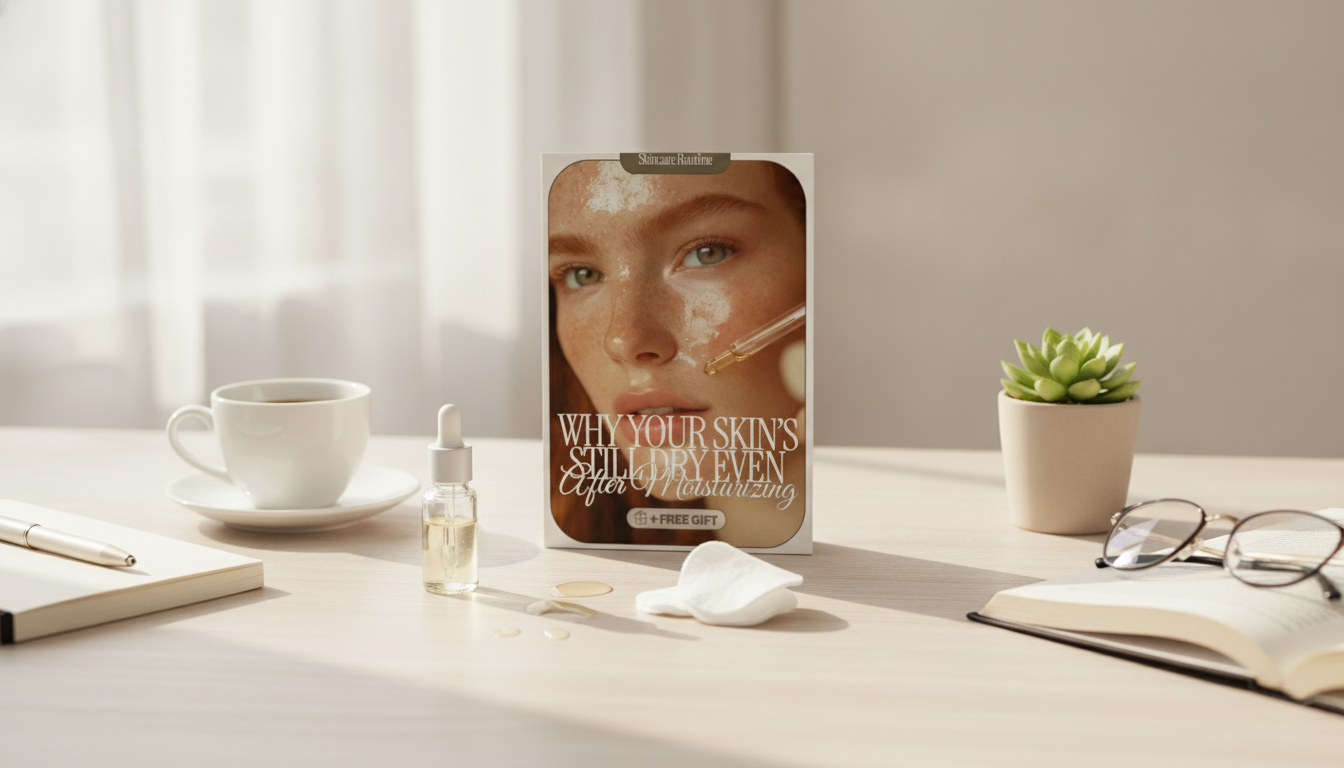
Why Skin Can Feel Dry Even After Moisturizing
Moisturizer can sit on the surface and still leave skin feeling tight, flaky, or rough. That usually means the routine is missing one of three things: water, barrier support, or the right application order. The fix is less about buying a “stronger” cream and more about matching products to whether skin is dry, dehydrated, or both—then sealing hydration without stripping the barrier. For more guidance, see Dry skin – Diagnosis and treatment – Mayo Clinic.
Dry vs. dehydrated: the mismatch that keeps happening
“Dry” and “dehydrated” sound similar, but they describe different problems—and treating the wrong one can make skin feel coated yet still uncomfortable. For further reading, see 7 Tips for Treating Dry Skin on Your Face – Cleveland Clinic.
- Dry skin lacks oil (lipids). It often feels rough, looks dull, and flakes easily.
- Dehydrated skin lacks water. It tends to feel tight, look a bit crepey, and can even get oilier in the T-zone while still feeling tight.
- Both can coexist, which is why a single “rich cream” doesn’t always solve the problem.
- If you only add oils/emollients without water-supporting humectants, skin can feel sealed but still tight.
- If you only add humectants without sealing them, water can evaporate more easily (higher transepidermal water loss), especially in dry climates.
| Clue | More likely dry | More likely dehydrated | Could be both |
|---|---|---|---|
| Feels tight right after cleansing | Yes | Yes | |
| Flakes that improve with richer balm/occlusive | Yes | Yes | |
| Looks shiny but feels tight | Yes | Yes | |
| Fine lines look more obvious by afternoon | Yes | Yes | |
| Persistent rough patches, especially cheeks | Yes | Yes |
Common reasons moisturizer “doesn’t work”
If you’re moisturizing consistently but still feel dry, the issue is often what happens before or after the moisturizer—or what the environment is doing to your barrier.
- Applying to completely dry skin: Many formulas perform better when applied to slightly damp skin so humectants can bind water rather than pulling it from deeper layers.
- Using a cleanser that strips: High-foam surfactants, hot water, or long cleansing can disrupt the barrier and increase water loss.
- Over-exfoliating: Acids, scrubs, and retinoids used too frequently can create micro-barrier damage—leading to stinging, flaking, and a “never satisfied” tight feeling.
- Skipping barrier lipids: Ceramides, cholesterol, and fatty acids help rebuild barrier structure. Without them, hydration escapes quickly.
- Not using an occlusive when needed: Petrolatum, dimethicone, and waxes reduce evaporation—especially useful at night or in low humidity.
- Layering conflicts: Strong actives layered daily can outpace the skin’s ability to recover, even if moisturizer is applied afterward.
- Environment: Low humidity, wind, indoor heating/AC, and frequent handwashing can overwhelm a good routine.
- Medical or irritant triggers: Eczema, contact dermatitis, fragrance sensitivity, and some acne treatments can keep skin feeling dry and reactive.
For practical dry-skin self-care guidance, the American Academy of Dermatology Association recommends shorter, lukewarm cleansing and moisturizing immediately after washing. For a deeper look at barrier function, the National Eczema Association and the Cleveland Clinic explain how barrier disruption can drive ongoing dryness.
A routine that supports hydration and the skin barrier
Think of your routine as a sequence: cleanse without stripping, add water, then seal and support the barrier so that water stays put.
- Cleanse gently: Use lukewarm water, keep contact time short, and consider a low-foam, fragrance-free cleanser when skin feels tight.
- Add water first: Hydrating toner/essence or a serum with glycerin, hyaluronic acid, panthenol, or urea can improve water content.
- Seal strategically: Follow with a moisturizer that includes barrier-supporting lipids (ceramides + fatty acids). Add an occlusive layer at night if needed.
- Keep exfoliation minimal while repairing: Pause scrubs; scale acids/retinoids back until flaking and stinging settle.
- Protect in the morning: Daily sunscreen reduces inflammation and barrier disruption from UV exposure.
- Adjust for climate: In very dry air, prioritize occlusives; in humid climates, lighter layers may be enough if your barrier is intact.
- Patch-test when irritated: New products can worsen dryness if there’s fragrance, essential oils, or a sensitizing preservative.
| Step | Goal | Examples of helpful ingredients |
|---|---|---|
| Cleanser | Remove buildup without stripping | gentle surfactants, glycerin |
| Hydrating layer | Add water-binding support | glycerin, hyaluronic acid, panthenol, urea |
| Moisturizer | Rebuild barrier + soften | ceramides, cholesterol, fatty acids, squalane |
| Occlusive (optional) | Reduce water loss (especially at night) | petrolatum, dimethicone, waxes |
| Sunscreen (AM) | Prevent UV-driven dryness and inflammation | broad spectrum SPF 30+ |
Troubleshooting by symptom
A practical guide for building a fix that lasts
Recommended resources (internal)
- Why Your Skin’s Still Dry Even After Moisturizing (digital guide)
- How Much Driving Makes a Car Worth It – Practical Guide
FAQ
Why does my skin feel tight minutes after applying moisturizer?
This commonly happens when skin is dehydrated, the barrier is disrupted, or both—so the moisturizer softens the surface but doesn’t hold water in. Applying hydrating products to slightly damp skin and sealing with a barrier-supporting moisturizer (and an occlusive at night in dry air) can help.
Can hyaluronic acid make dryness worse?
It can feel worse if it’s used alone in very dry air or without a moisturizer on top, because hydration isn’t being sealed in. Layer it under a moisturizer, and consider an occlusive at night if your environment is low humidity.
How long does it take to repair a damaged skin barrier?
Many people notice improvement in about 2–6 weeks, depending on severity and how consistently irritants are reduced. A gentle routine with barrier-supporting ingredients and fewer actives typically speeds recovery; seek medical help if symptoms are severe or spreading.















Leave a comment