Family Adventure Vacation Ideas: Easy Plans for Any Trip
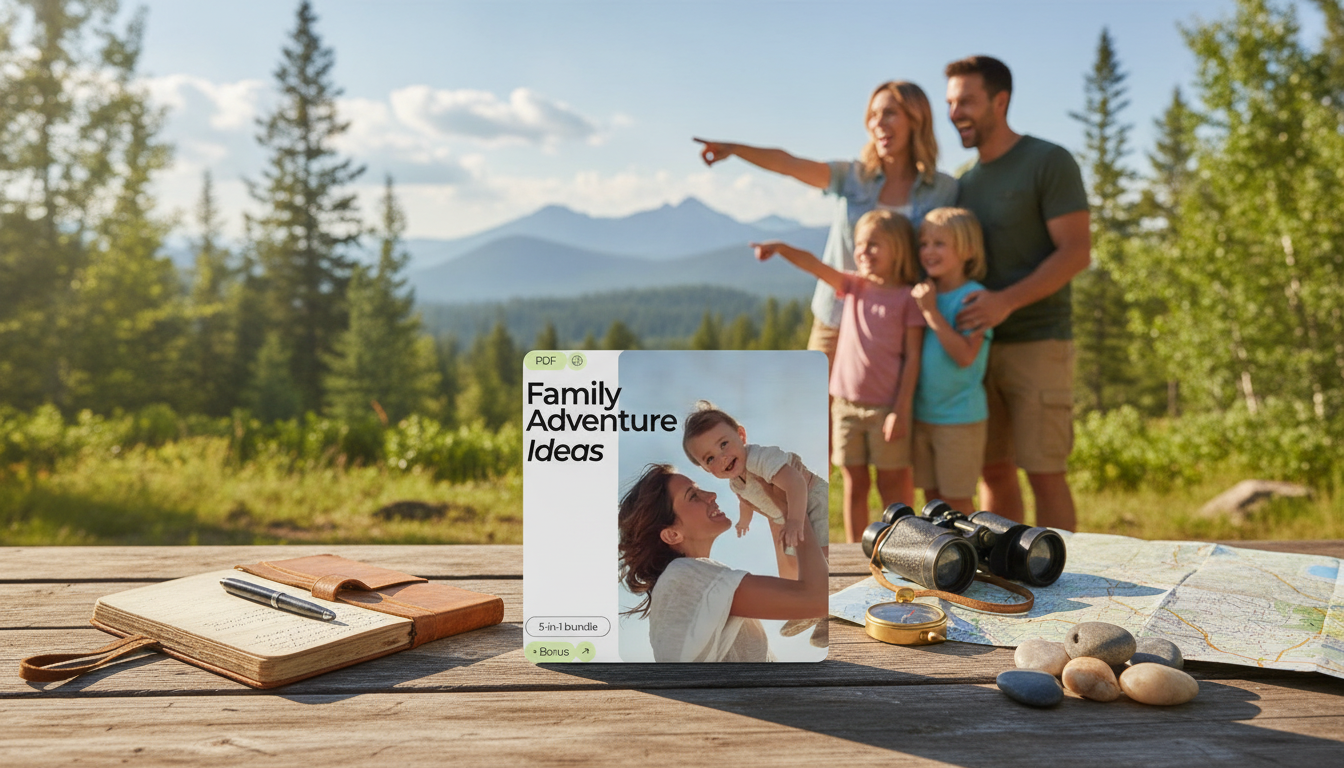
Make Every Family Trip an Adventure: Family Adventure Vacation Ideas Bundle
Family trips get easier (and more memorable) when the “what should we do?” moments are replaced with ready-to-go ideas that fit your kids’ ages, energy levels, and travel style. The Make Every Family Trip an Adventure: Family Adventure Vacation Ideas Bundle is built to help turn ordinary weekends, road trips, and longer vacations into shared adventures—with flexible activity themes, simple planning prompts, and options for indoors, outdoors, city breaks, and nature escapes.
What counts as a family adventure (and why it works for every age)
“Adventure” doesn’t have to mean extreme sports or complicated logistics. For families, it’s usually a mix of novelty, a shared challenge, and a story everyone retells later—sometimes from a two-hour outing that went delightfully off-script.
The best adventures balance structure and freedom: a clear starting point (trailhead, neighborhood, museum, beach access), a few constraints (time box, simple rules, one goal), and room for kids to make choices. That choice—picking the next turn, selecting the “mission,” deciding the snack stop—creates buy-in and smoother transitions.
Micro-adventures (about 2–4 hours) often create more repeatable memories than one oversized, exhausting day. They’re easier to fit around naps, meal times, and weather changes, and they build momentum: one successful mini quest makes the next one feel doable.
Finally, a good plan includes a “reset option” so the day stays fun when energy dips: a snack stop, indoor backup, shaded break, or quiet time at the hotel. The reset isn’t “giving up”—it’s how families stay regulated and keep the adventure going.
What’s inside the Family Adventure Vacation Ideas Bundle
This bundle is designed to cut planning time while keeping your trip flexible. Instead of starting from a blank page at every destination, you get adaptable idea sets that work across beach towns, mountains, national parks, big cities, and small-town stopovers.
It also includes activity prompts that make decision-making simple: quick pick lists, themed challenges, and low-prep games that work with what you already have in your bag. That’s especially helpful when you want a fun afternoon without spending the entire morning researching.
Every family group is different, so the ideas are built with flexibility for toddlers, tweens/teens, multi-generational travel, and mixed interests. You’ll also find ready-to-use pacing frameworks—half-day adventures, full-day itineraries, and rainy-day alternatives—so you can match the plan to your real schedule instead of forcing everyone into a rigid timeline.
Choose your adventure style: match the trip to your family’s energy
High-energy days
Balanced days
Low-key adventures
For teens
Adventure ideas by setting, time, and effort
| Setting | Time Needed | Effort Level | Adventure Idea | Simple Add-On |
|---|---|---|---|---|
| National park / nature area | 2–4 hours | Moderate | Junior ranger-style exploration (self-led) | Photo checklist of plants/animals |
| Beach / lakeside | Half day | Low–Moderate | Shoreline discovery walk + sand challenge | “Best shell/rock” mini awards |
| City break | 3–5 hours | Low | Neighborhood “tastes and treats” crawl | One new food per person |
| Road trip stopover | 60–120 minutes | Low | Scenic viewpoint + car picnic | Postcard journaling moment |
| Rainy day / indoor | 2–3 hours | Low | Museum mission (find-and-sketch items) | Souvenir under a set budget |
Build a simple itinerary that doesn’t collapse by noon
Adventure packing that stays light (and prevents avoidable meltdowns)
Set tech boundaries before you need them: download offline maps and a few offline activities, then define “phone moments” (car ride, waiting in line) versus “present moments” (viewpoint, wildlife spotting, family game). For stargazing nights, a dedicated tool can make the experience feel special—consider the 200/2400mm High-Power Astronomical Telescope for Stargazing Enthusiasts for a backyard-or-cabin “night quest” that doesn’t require a big drive.
Make the adventure stick: memory-making that doesn’t feel like homework
When a road trip is the adventure
For simpler real-time decisions, pre-pick three possible stops and commit to one or two based on actual energy. If a car purchase or usage is part of your travel plan, it helps to set realistic driving frequency expectations and costs before committing—see How Much Driving Makes a Car Worth It – Practical Guide to Decide How Often Do I Need to Drive to Justify a Car.
For trip planning basics and safety checks, these resources are helpful: National Park Service – Plan Your Visit, CDC – Travel Information, and AAA – Road Trip Planning.
Bring the ideas with you
If you want a plug-and-play way to turn downtime into something fun—without overplanning—start with the Make Every Family Trip an Adventure: Family Adventure Vacation Ideas Bundle. It’s designed to help you pick an approach fast, adapt to your destination, and keep a backup option ready when the day needs a pivot.
FAQ
What ages does the Family Adventure Vacation Ideas Bundle work for?
The prompts can scale from toddlers to teens: short, sensory-friendly “missions” for little kids; longer challenges and photo tasks for school-age kids; and more autonomy-based options for teens (like choosing a stop or leading navigation). It also works well for mixed-age groups by offering easy reset breaks and optional add-ons.
How can a family keep adventures fun on a tight schedule?
Use a repeatable micro-adventure formula: one anchor activity (60–120 minutes), one simple “bonus” challenge (scavenger list or photo goal), and one easy win (treat stop or playground). Pre-made idea sets and a quick Plan B keep you moving without spending the whole day planning.
What if the weather changes or plans fall through?
Build a short Plan B list before you leave: indoor swaps (museum, market, library), shorter loops, and a café or snack reset. Packing light essentials—layers, small towel, and offline maps—also makes last-minute pivots feel like part of the adventure instead of a failure.
















Leave a comment