Clean Outdoor Furniture Webbing: Easy 5-Step Guide
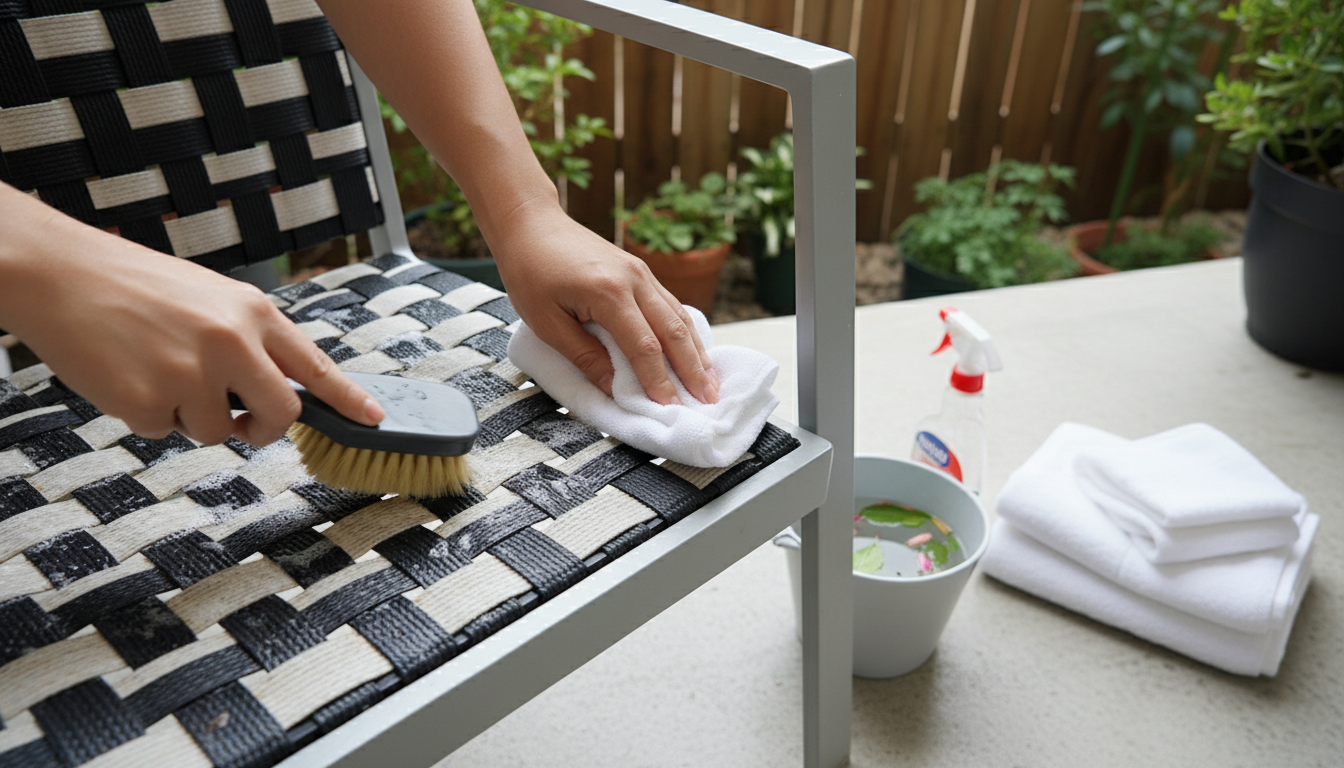
How to clean outdoor furniture webbing?
Outdoor furniture webbing (vinyl/PVC straps, woven resin, or synthetic fibers) holds up well, but body oils, sunscreen, pollen, and mildew can dull it fast. A gentle, rinse-first routine keeps it flexible and prevents cracking or fraying.
Step 1: Rinse off loose grit
Start with a thorough rinse using a garden hose to remove sand and dust that can act like sandpaper. If needed, use a soft brush or microfiber cloth to sweep debris out of the weave and corners.
Step 2: Wash with mild soap
Mix a few drops of mild dish soap into a bucket of warm water. Dip a soft-bristle brush or sponge into the solution and scrub along the weave, working in small sections. Avoid harsh detergents, bleach, or abrasive pads unless the manufacturer specifically allows them.
Step 3: Target mildew and stubborn grime
If you see dark specks or a musty film, clean promptly. Use an outdoor-safe cleaner that’s appropriate for synthetic webbing, and always test in an inconspicuous spot first. Keep cleaning solutions on the surface only briefly, then rinse well to prevent residue that attracts more dirt.
Step 4: Rinse thoroughly and air-dry
Rinse until the water runs clear and no suds remain. Let the furniture air-dry completely in a well-ventilated area; trapped moisture can encourage mildew. If possible, tilt or reposition pieces so water doesn’t pool in seams or between straps.
Step 5: Ongoing care and prevention
Quick rinses between deep cleans go a long way. Wipe up sunscreen and spills soon after use, and store or cover furniture during long wet stretches. For more detailed guidance on cleaning and protecting outdoor materials, visit this outdoor fabric care guide.
For Clean Outdoor Furniture Webbing: Easy 5-Step Guide, the best answer depends on fit, material, care instructions, and how the product will be used day to day.
FAQ
Can you pressure wash outdoor webbing?
It’s usually safer to avoid it, since high pressure can fray fibers, force water into joints, and loosen straps. If you must, use a wide fan tip, keep distance, and stay on a low setting.
















Leave a comment