Portable Thermal Night Vision Scope: Fast Heat Detection
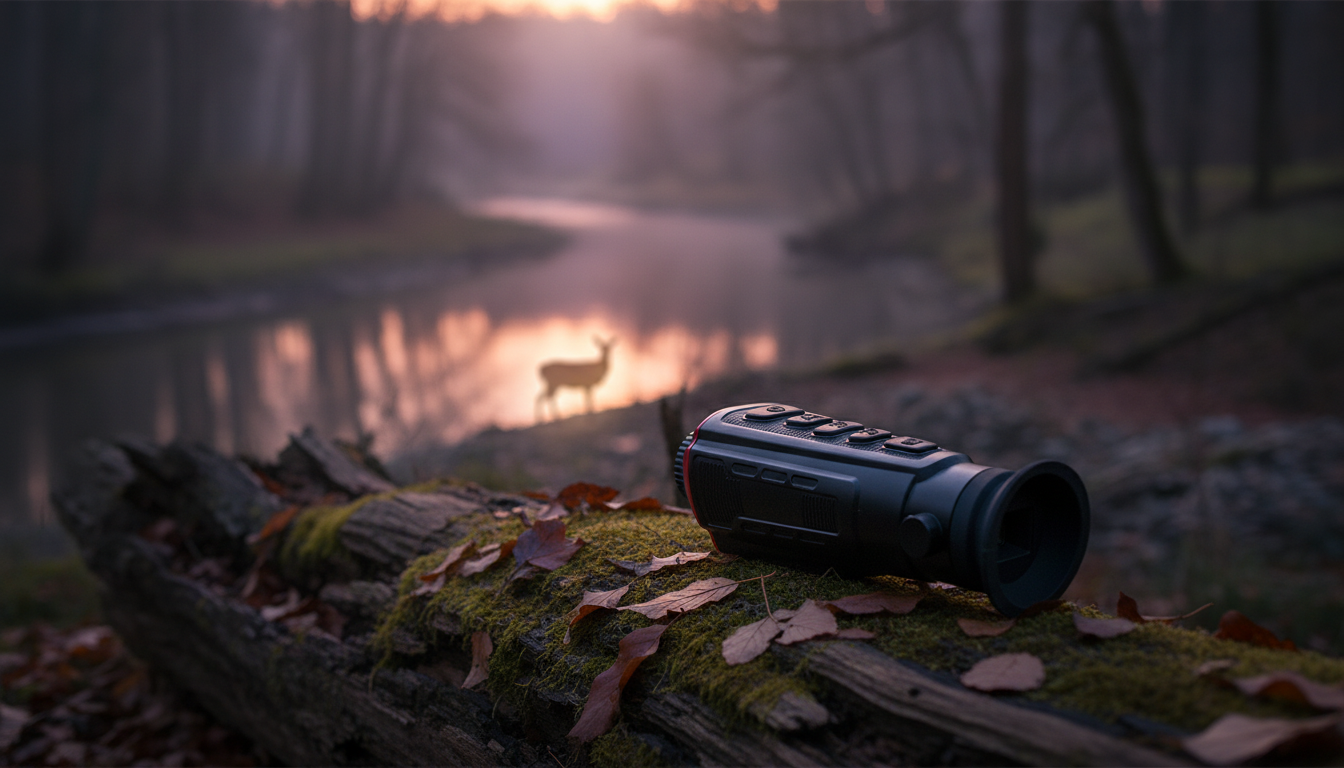
A portable thermal night vision scope makes it easier to spot heat signatures when visible-light optics struggle—deep darkness, smoke, light fog, and “busy” backgrounds like brush lines or mixed terrain. Instead of relying on reflected light, thermal imaging reads emitted infrared energy and renders temperature differences as a usable scene. For a helpful technical overview of the basics, see FLIR’s explanation of how thermal imaging works and NOAA’s primer on what infrared is.
What a Portable Thermal Night Vision Scope Does Well
- Highlights heat differences to reveal animals, people, and vehicles against cooler backgrounds.
- Works without an IR illuminator, reducing reflective “hot spots” and minimizing dependence on ambient light.
- Supports quick scanning of wide areas for movement or presence before switching to detailed observation.
- Useful for property checks, wildlife observation, search tasks, and nighttime navigation planning.
Thermal is at its best when the priority is fast detection: locating a warm subject that might otherwise blend into shadow, clutter, or uneven terrain. It also stays useful when conditions change—cloud cover, moonlight, and partial obscurants tend to affect visible/near-IR devices more than long-wave thermal.
Thermal Imaging vs Digital Night Vision: Which Fits the Job
- Thermal excels at detection: quickly finding a heat source in cluttered or dark scenes.
- Digital/IR night vision often excels at identification: reading markings or finer visual details when conditions allow.
- Some scenarios benefit from pairing tools: thermal to locate, then conventional optics to confirm.
| Option | Best for | Common limitations |
|---|---|---|
| Thermal imaging scope | Rapid detection of warm targets in darkness and uneven terrain | Fine identification details can be limited; glass and water surfaces can be deceptive |
| Digital night vision with IR illuminator | Seeing scene details at moderate distances when IR reflection is manageable | IR bloom/overexposure at close range; performance depends on illuminator and conditions |
| Low-light optic (non-IR) | Dusk/dawn observation with natural light | Degrades quickly in true darkness; struggles in dense shade or overcast nights |
A practical way to choose: if the main goal is “Is anything out there?” thermal usually wins. If the main goal is “What exactly is it?” digital night vision (or a conventional optic in available light) can be the better fit—especially at closer distances with controlled IR use.
Key Specs That Change Real-World Performance
- Sensor resolution: higher resolution can improve clarity and target separation, especially at longer distances.
- NETD (thermal sensitivity): lower NETD generally helps distinguish subtle temperature differences in humid or warm environments.
- Lens and field of view: wider view speeds scanning; narrower view can help with longer-range observation.
- Refresh rate: smoother panning and better tracking of moving targets when scanning quickly.
- Display type and resolution: affects comfort, eye fatigue, and how clearly edges and contours appear.
- Detection vs identification range: prioritize honest, scenario-based ranges rather than maximum marketing numbers.
Two specs that often surprise first-time buyers are NETD and field of view. In warm seasons, when the environment holds heat longer, a more sensitive sensor helps “pull apart” small temperature differences. Meanwhile, a wide field of view can feel like a performance upgrade because it helps you cover ground faster and reduces the temptation to overuse digital zoom.
Portable Design Considerations for Pack-and-Go Use
- Weight and balance: lighter units reduce fatigue; consider how it rides on a sling, pack strap, or chest rig.
- Battery system: runtime, swappable batteries, and cold-weather performance all matter more than headline hours.
- Ruggedness: look for recoil rating (if mounted), shock resistance, and weather protection for rain and dust.
- Controls: glove-friendly buttons, quick palette switching, and easy zoom behavior improve speed in the dark.
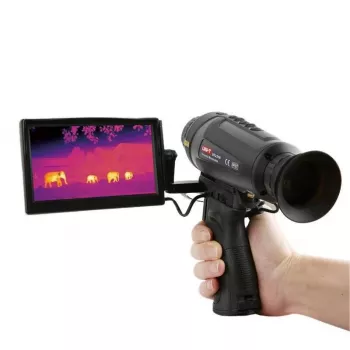
- Mounting and accessories: verify rail compatibility, eye relief, and whether a handheld mode is practical.
For truly portable use, the “small stuff” matters: a control layout you can operate without looking, a battery system that doesn’t force you to end a session early, and a body shape that doesn’t wobble or torque when you pan. If the unit might be used both handheld and mounted, prioritize straightforward transitions between modes (and make sure eye relief is comfortable).
Field Setup and Scanning Tips
Care, Storage, and Long-Term Reliability
Product Spotlight: Portable Infrared Thermal Imaging Night Vision Scope
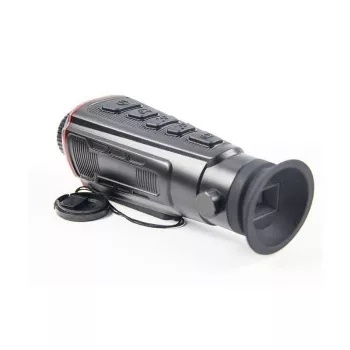
If your priority is quick heat-signature detection after dark, the Portable Infrared Thermal Imaging Night Vision Scope is built for portable thermal viewing and situational awareness. It’s a practical fit for users who need rapid detection more than color scene detail—especially for scanning property lines, checking remote areas, or spotting movement across mixed terrain.
For daylight observation and sky-focused viewing (a different use case than thermal), consider the 200/2400mm High-Power Astronomical Telescope for Stargazing Enthusiasts.
FAQ
Can a thermal scope see through glass or windows?
Most standard glass blocks long-wave infrared, so a thermal scope typically shows the temperature of the glass surface (or reflections) rather than what’s behind it. In practice, windows often appear as a uniform panel instead of a “see-through” view.
What affects thermal performance in warm or humid weather?
Warm backgrounds reduce temperature contrast, and humidity or haze can soften edges and reduce apparent detail. A more sensitive sensor (lower NETD) can help, and you’ll usually get better results by scanning more slowly and choosing a palette that boosts contrast without blowing out highlights.
Is a thermal scope better than IR night vision for identifying what the target is?
Thermal is usually better for detecting that something warm is present, while digital/IR night vision can be better for identifying fine visual details when conditions allow. Many users locate targets with thermal and then confirm identification with conventional optics or a digital night-vision device.














Leave a comment