200/2400mm High-Power Telescope: Moon & Planet Guide
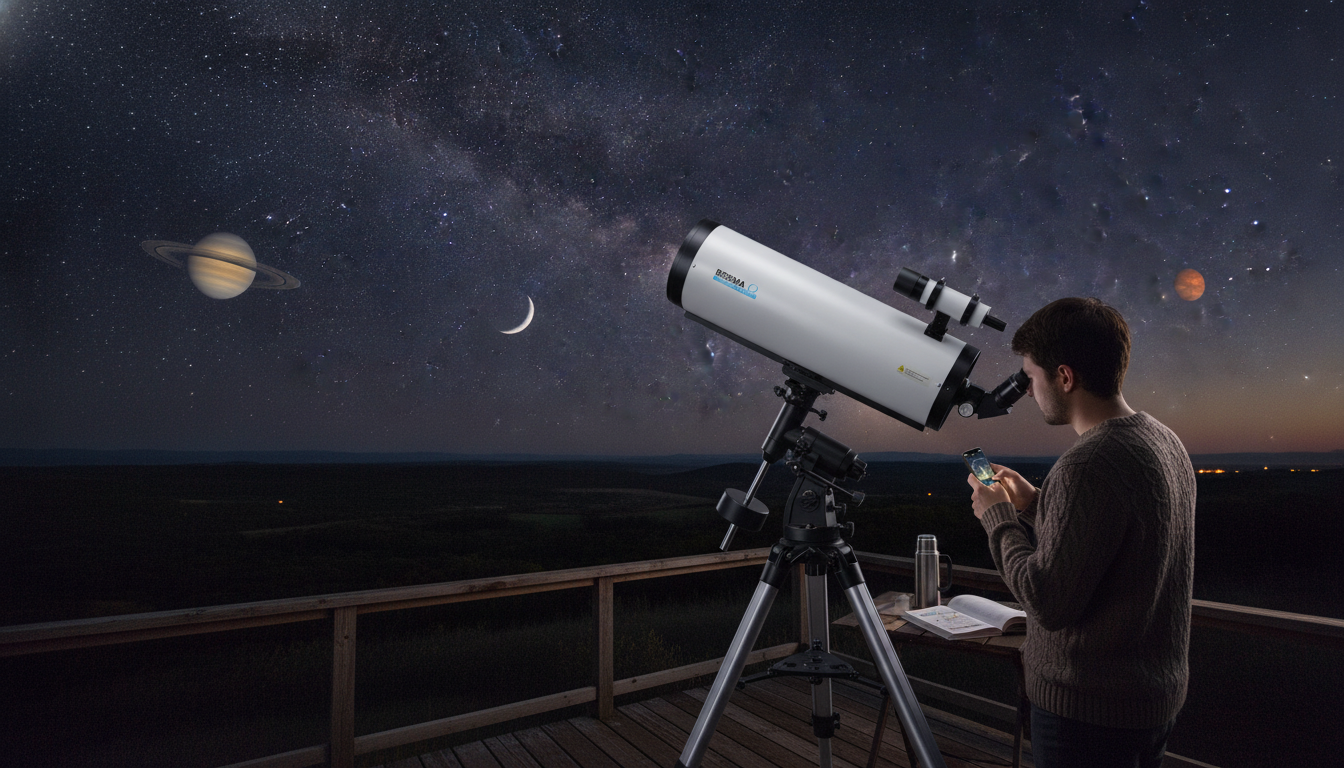
200/2400mm High-Power Astronomical Telescope for Stargazing Enthusiasts: What It’s Built to Do
A long-focal-length, high-power telescope can be a strong match for observers who prioritize detailed views of the Moon, planets, and tight double stars. A 200/2400mm configuration leans into image scale and resolution, but it also asks for solid setup habits, a steady mount, and realistic expectations about atmospheric “seeing.” Below is a practical, night-to-night guide to what this optical format is designed to do well, where it feels less at home, and how to get satisfying views more consistently.
At a Glance: What “200/2400mm” Means at the Eyepiece
Think of “200/2400mm” as two big levers that shape your experience. The 200mm aperture is your light bucket and detail engine: more aperture generally helps reveal finer lunar/planetary structure and can brighten many deep-sky targets. The 2400mm focal length sets the image scale—so you reach high magnification with common eyepieces more easily than with shorter-focal-length instruments. The tradeoff is a narrower true field of view, which favors smaller targets (planets, lunar features, compact objects) over sweeping Milky Way panoramas.
Even with great optics, high power only pays off when the atmosphere cooperates. On nights of soft, shimmering stars, pushing magnification tends to make the blur bigger rather than revealing more detail.
Quick Numbers to Interpret 2400mm Focal Length
| Eyepiece focal length | Approx. magnification (2400mm ÷ eyepiece) | Best for |
|---|---|---|
| 25mm | 96× | Framing the Moon, bright clusters, initial target finding |
| 10mm | 240× | Planets on steady nights, lunar craters, close doubles |
| 6mm | 400× | Occasional high-power attempts when seeing is excellent |
| Barlow + 10mm | 480× | Specialty use; often limited by seeing and tracking |
Where This Telescope Shines
Moon: high-contrast terrain and “terminator drama”
The Moon is a natural home for long focal lengths. As the terminator (the day-night boundary) moves, crater rims and mountain ranges throw long shadows that make subtle relief easier to see. With a 200mm aperture, you can spend an entire session on a single region—rilles, overlapping craterlets, and bright ray systems—without running out of detail.
Planets: detail when seeing is steady
When conditions cooperate, planetary observing is where 2400mm feels effortless. Jupiter’s main belts and changing cloud features can pop at moderate-to-high power; Saturn’s rings benefit from added image scale, and the Cassini Division may appear during steadier moments. Mars becomes far more rewarding near favorable oppositions, where polar caps and dark surface markings can come into view. Venus is about phases and crisp edges rather than surface detail.
Double stars: splitting tighter pairs
Resolution and magnification work together on double stars. A well-collimated, thermally stabilized system can separate closer pairs more cleanly, especially when diffraction patterns look steady rather than boiling. This is also an excellent way to judge whether conditions support higher magnification before turning back to planets.
Bright deep-sky objects: compact targets over wide ones
Brighter deep-sky objects can be satisfying—particularly globular clusters (denser, more compact) and smaller planetary nebulae where higher image scale helps. Very large nebulae and big open clusters can be harder to frame because the true field of view is typically narrower at the magnifications this telescope encourages.
Magnification: Useful Range vs. “Empty Power”
Mount, Tripod, and Tracking: The Make-or-Break Factors at High Power
Setup and First Night Checklist
Observing Targets That Pair Well With a Long Focal Length
Lunar tour strategy
Planet routine that improves results
Observe planets when they’re highest in the sky (near culmination). Looking through less atmosphere often means sharper edges and steadier detail. If you want a reliable reference for what’s visible across the Solar System, NASA’s guides are a solid starting point: NASA Solar System Exploration.
Double-star practice for “seeing awareness”
Start with brighter, well-known pairs and learn to recognize moments of steadiness. For broader observing guides and seasonal target ideas, Sky & Telescope’s observing resources are a dependable reference.
Compact showpieces
Try globular clusters and smaller planetary nebulae, especially under darker skies. If variable stars and systematic observing interest you later, the AAVSO resources are a deep well of equipment and observing guidance.
Care, Storage, and Longevity
Product Snapshot
200/2400mm High-Power Astronomical Telescope for Stargazing Enthusiasts is best suited to observers who want lunar and planetary detail first, with the flexibility to explore brighter deep-sky objects that fit a narrower field. Plan to pair it with a stable mount/tripod, a small set of quality eyepieces, and (optionally) a Barlow for selective high-power nights rather than constant maximum magnification.
For longer sessions, comfort can make the difference between a quick look and an hour of patient observing. A supportive seat such as the Elegant Ebony Genuine Leather Rocking Chair can help you stay steady at the eyepiece, especially when waiting for brief moments of excellent seeing.
FAQ
Is a 2400mm focal length good for beginners?
Yes—especially for the Moon and planets—because it reaches useful high magnification with common eyepieces. The main learning curve is the narrower field of view, so starting at lower power for finding targets and using a steady mount makes things much easier.
How much magnification is actually useful for planets?
Many nights favor moderate-to-high power rather than extreme power, often around the low hundreds depending on conditions. Increase magnification only while the image stays crisp, and prioritize observing when the planet is high in the sky for steadier detail.
Can it be used for deep-sky objects too?
Yes, it can show brighter deep-sky objects, especially compact ones like globular clusters and smaller nebulae. Very large nebulae and wide open clusters may not fit as easily in the field, so darker skies and compact targets tend to be the most rewarding.














Leave a comment