Homework Help for Parents: Routines, Scripts & Printables
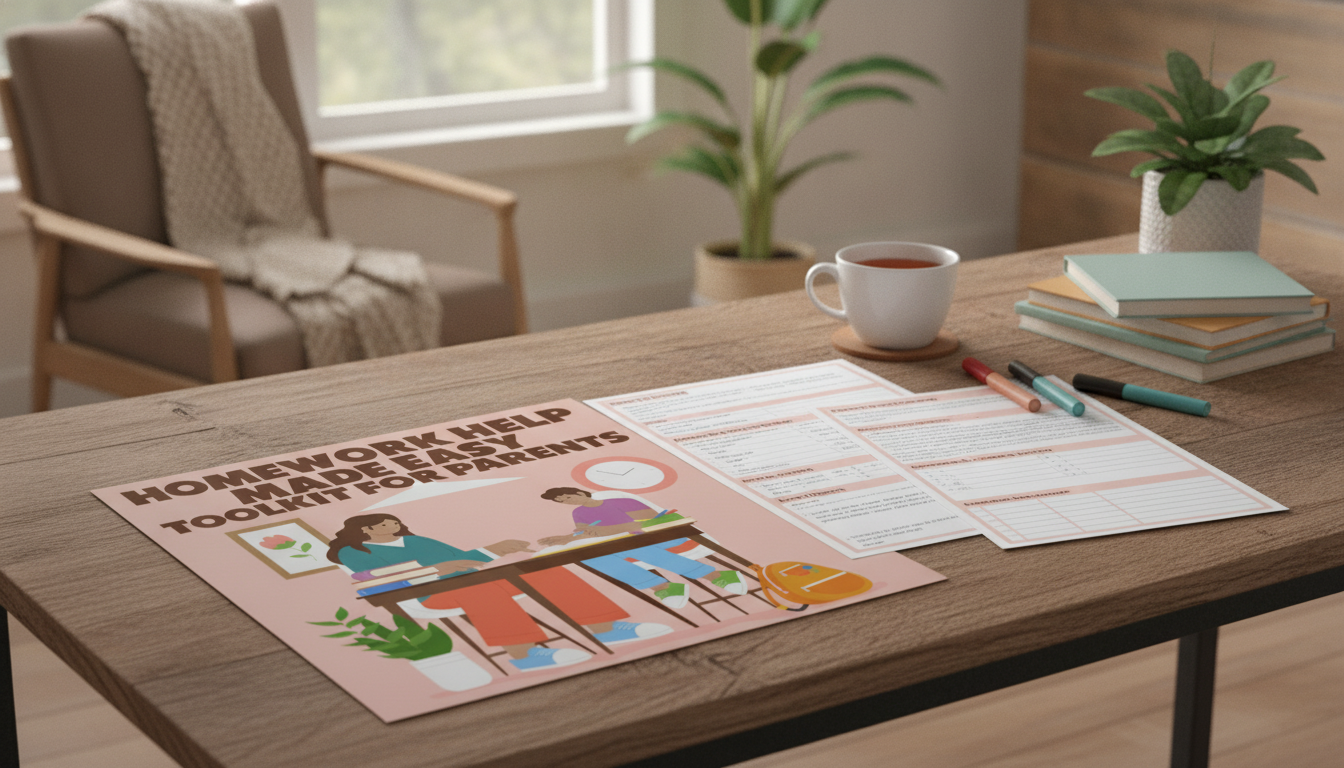
Homework Help Made Easy: A Parent Toolkit for Strong Study Habits and Independent Learning
Homework goes smoother when kids know what to do, where to do it, and how to recover when they get stuck. The goal isn’t a perfect night—it’s a repeatable routine that lowers stress, builds follow-through, and gradually shifts more responsibility to the student. The ideas below focus on practical habits, simple language you can reuse, and tools that make “do your homework” feel doable.
What “homework independence” looks like at home
Homework independence isn’t about never needing help. It’s about having a predictable process and using support in a way that keeps the student in the driver’s seat.
- Begins homework with minimal prompting and a clear first step
- Uses a simple plan: what’s due, what materials are needed, and how long it should take
- Checks directions before starting and after finishing
- Attempts a problem, then asks for help with a specific question (not “I don’t get it”)
- Packs up and resets the space for the next day
Set up a routine that reduces decision fatigue
Many homework battles aren’t about the assignment—they’re about all the tiny decisions that come before it. When the “when” and “where” are already decided, kids have more mental energy for the work itself.
- Choose a consistent homework window tied to an existing habit (after snack, after practice, after dinner)
- Create a “launch pad” for school items (backpack, charger, folder, library book) to prevent last-minute scrambles
- Use a short start-up ritual: water, materials out, timer set, phone away
- Keep the workspace boring and predictable: good light, flat surface, minimal clutter
- Plan for movement breaks before behavior becomes an issue
Sample weeknight homework routine (adjust by age and workload)
| Step | Time | What the parent does | What the student does |
|---|---|---|---|
| Reset & materials | 3–5 min | Quiet check that supplies are available | Opens planner/LMS and gathers what’s needed |
| Plan the work | 5 min | Asks 2 prompts: “What’s due?” “What’s first?” | Lists tasks and chooses the first small step |
| Work block 1 | 15–25 min | Stays nearby but not hovering | Works until timer ends; marks questions |
| Break | 3–7 min | Encourages movement/snack | Moves, hydrates, resets focus |
| Work block 2 | 15–25 min | Offers brief check-in if requested | Finishes remaining items or starts next task |
| Review & pack | 3–5 min | Quick accuracy check on directions | Proofreads, submits, and packs up |
Teach a simple planning system kids can repeat daily
Planning is a skill—one that improves when kids practice the same small steps every day. A one-page checklist or a single note on a device can be enough, as long as it’s consistent.
- Use one place to track assignments (planner, checklist page, or a single digital note)
- Break “big” tasks into micro-steps (choose topic → find 2 sources → outline → draft → revise)
- Estimate time, then compare to actual time to improve planning skills
- Prioritize: due tomorrow first, then high-effort items, then quick wins
- Add a “buffer” step for printing, charging devices, or gathering materials
If planning feels like “extra work,” keep it tiny: one minute to list tasks, one minute to pick the first step, and one minute at the end to pack up and reset.
When kids resist: calm scripts and boundaries that work
Resistance usually spikes when kids feel controlled, overwhelmed, or unsure where to start. The most helpful language is neutral, brief, and repeatable.
Support without doing it: the “coach, not savior” approach
For evidence-based context on keeping homework healthy and manageable, the American Academy of Pediatrics offers practical guidance. If homework stress is affecting mood or sleep, the American Psychological Association also shares signs to watch and supportive next steps.
Printables that make follow-through easier
Printable pages to rotate through (keep it simple)
| Printable | Best for | How to use in 2 minutes |
|---|---|---|
| Daily checklist | Elementary–middle school | Check off start, attempt, review, pack up |
| Weekly plan | Busy weeks | Write due dates; pick two work blocks ahead of time |
| Study plan | Tests/quizzes | List topics; schedule short practice sessions |
| Help request stems | Avoiding “I don’t get it” | Point to the stem and fill in the blanks |
| End-of-week reflection | Building independence | Circle one win, one tweak for next week |
A week-by-week rollout that sticks (without overwhelming anyone)
For more ideas on building planning and self-management skills over time, Edutopia’s executive function resources are a helpful reference: Strategies for Building Executive Function Skills.
Printable toolkit option for parents who want everything ready
- For a structured set of checklists, planning pages, and help scripts, see the Homework Help Made Easy Toolkit for Parents – Printable Guide for Creating Study Habits, Homework Strategies & Independent Learning.
- To make the homework space comfortable and distraction-light, a dedicated seat can help signal “work mode,” such as the Elegant Ebony Genuine Leather Rocking Chair (especially for reading, reviewing notes, or calm study breaks).
FAQ
How long should homework take each night?
Many families aim for about 10 minutes per grade level (roughly 10–60 minutes for grades 1–6), while middle and high school can vary more by course load. Use a timer for work blocks, and if homework regularly runs far past a reasonable limit, share the pattern with the teacher to problem-solve.
What if homework turns into a nightly meltdown?
Check the basics first—hunger, fatigue, distractions, and whether the first step is too big. Start with one tiny action, use short timed work blocks with breaks, and keep notes on what triggers the meltdown so you can loop in a teacher or counselor if needed.
How can a parent help without giving answers?
Coach with prompts, not solutions: point back to the directions, a worked example, or class notes first. Keep help to a brief window (2–5 minutes), then hand responsibility back to the student with a clear next step.















Leave a comment