Launch a Side Hustle: Weekend MVP, Funnel, First Sales

Side Hustle Launch Playbook: MVP to First Customers, Simple Funnel, and Pricing That Sells
A low-risk side hustle doesn’t start with a “million-dollar idea.” It starts with a sellable offer that can be delivered quickly, validated through real conversations, and improved with paid feedback. The goal is momentum: a minimum viable offer, a simple funnel that turns outreach into booked calls (or checkouts), and pricing that’s high enough to be worth your time while still easy to say “yes” to.
Below is a practical, low-drama playbook for getting from concept to first customers without overcommitting money, evenings, or energy. The approach aligns with rapid validation principles popularized by The Lean Startup methodology and small-business guidance on building early sales systems from the U.S. Small Business Administration.
Start With a Low-Risk Offer (Not a Big Idea)
Week one traction comes from clarity. Instead of brainstorming endless “side hustle ideas,” define a problem and a deliverable that can be shipped fast.
- Define the problem in one sentence: who it’s for, what hurts, and what outcome is desired.
- Choose offers that can be delivered manually at first (service, audit, template pack, coaching call, done-with-you setup).
- Set a narrow niche for week-one traction: one audience, one promise, one deliverable.
- Run a quick feasibility check: can it be delivered in evenings/weekends, with existing skills and minimal tools?
Low-Risk Side Hustle Filters and Green Flags
| Filter | What to Look For | Green Flag Example |
|---|---|---|
| Fast to deliver | Deliverable in days, not months | 60-minute strategy call + written action plan |
| Low upfront costs | Uses common tools; no inventory | Landing page + payment link + calendar |
| Clear outcome | Tied to revenue, time saved, or reduced risk | Lead follow-up system setup |
| Easy to validate | Prospects can say “yes” without long deliberation | Fixed-price starter package |
The Weekend MVP Sprint: Build the Smallest Sellable Version
An MVP is not a stripped-down product; it’s the smallest sellable version of your offer that produces the promised outcome once. Keep it tight, repeatable, and easy to explain.
- Write the MVP promise: “In X days, help Y achieve Z without W.”
- Define the MVP scope: the minimum steps required to produce the promised outcome once.
- Create a simple deliverable checklist and reuse it for every customer (repeatability beats complexity).
- Prepare proof substitutes if new: before/after from personal projects, mock samples, small case studies, or a pilot offer.
A helpful constraint: if you can’t outline delivery in 5–7 bullet points, it’s probably too big for a first offer.
Turn the MVP Into a Simple Sales Funnel
Early funnels should be “tool-light” and conversation-heavy. The job of the funnel is to remove friction: the prospect should quickly understand the outcome, see who it’s for, and take one next step.
- Traffic source: pick one channel for 14 days (network, local groups, niche communities, LinkedIn, referrals).
- Landing step: one page or one pinned post with the offer, outcomes, who it’s for, and a single call-to-action.
- Conversion step: one booking link or one checkout link; avoid multi-step forms early.
- Follow-up step: a short message sequence that clarifies fit and removes common objections.
- Delivery step: a repeatable onboarding checklist (payment → intake → kickoff → delivery → ask for testimonial).
A Simple Funnel That Can Be Set Up in an Evening
| Funnel Step | Tool-Light Option | Success Metric |
|---|---|---|
| Offer page | One-page site or document link | Clicks to inquiry rate |
| Contact/booking | Calendar link or email DM | Booked calls per week |
| Payment | Checkout link or invoice | Paid conversions |
| Onboarding | Intake form + shared folder | Time-to-start |
| Delivery | Reusable checklist + templates | On-time completion rate |
| Referral loop | Testimonial + referral ask | Referrals per client |
Pricing: Choose a Number That Supports Learning and Profit
Pricing is a strategy choice, not a self-esteem test. Start simple, charge enough to take delivery seriously, and adjust based on real buying behavior. For practical pricing frameworks, see Harvard Business Review’s pricing resources.
First Customer Tactics That Don’t Require an Audience
Keep Risk Low With Guardrails and a Weekly Rhythm
Common Mistakes That Slow Down Monetization
A Practical Playbook for Launching and Getting Paid
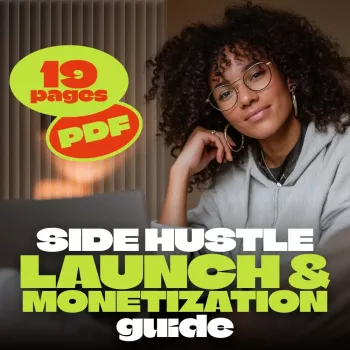
If you want a structured, fill-in-the-blanks version of this process, see Side Hustle Launch & Monetization Guide – Low-Risk Startup Playbook with The MVP Strategy, Building a Simple Sales Funnel, Pricing, and First Customer Tactics.
For another example of a practical, decision-focused digital guide, visit How Much Driving Makes a Car Worth It – Practical Guide to Decide How Often Do I Need to Drive to Justify a Car.
FAQ
What is an MVP for a side hustle?
It’s the smallest sellable version of your offer that delivers a specific outcome for a specific customer. Keep the scope tight, deliver it manually at first, and use those first paid results as proof of demand and a guide for improvements.
How do pricing and packaging work when starting from zero?
Start with one fixed-scope starter package and clear boundaries (what’s included, turnaround time, and limits). Then raise price gradually after successful deliveries until you begin to hear meaningful hesitation, and only add tiers after you’ve served several customers.
How can the first customers be found without paid ads?
Begin with warm outreach and community participation, using a short message that names the problem, outcome, and next step. Aim for a weekly target (for example, 20 conversations started and 5 calls booked), and follow up 2–3 times to capture the sales that don’t happen on the first touch.













Leave a comment