Hot Pot Grill Electricity Use: Watts, kWh & Cost
How much electricity does a hot pot grill use?
Most electric hot pot grill combos use about 1,200 to 1,800 watts when actively heating. That’s roughly 1.2 to 1.8 kilowatt-hours (kWh) for every hour the unit runs at full power. In real use, the heating element cycles on and off to maintain temperature, so average consumption is often lower than the maximum rating printed on the label.
Typical wattage range and what it means
Check the product plate or manual for the wattage (W). A 1,500W hot pot grill draws up to 1.5 kW. If you cook for 45 minutes, the “full-power” estimate is 1.5 kW × 0.75 hours = 1.125 kWh. If your electricity rate is $0.15/kWh, that session would cost about $0.17. Because many meals involve preheating and then maintaining a simmer or sear, the real-world cost can land closer to a dime or two per meal for many households.
What affects electricity use the most
Power draw depends on how hard the appliance has to work. High-heat grilling, bringing broth from cold to boiling, and cooking in a chilly room all push it closer to its maximum wattage. Frequent lid-off simmering, adding cold ingredients repeatedly, or using a large liquid volume also increases cycling and energy use. Nonstick or well-seasoned plates can heat more efficiently, while heavy smoke extraction fans (if included) may add a little extra draw.
How to estimate your exact cost
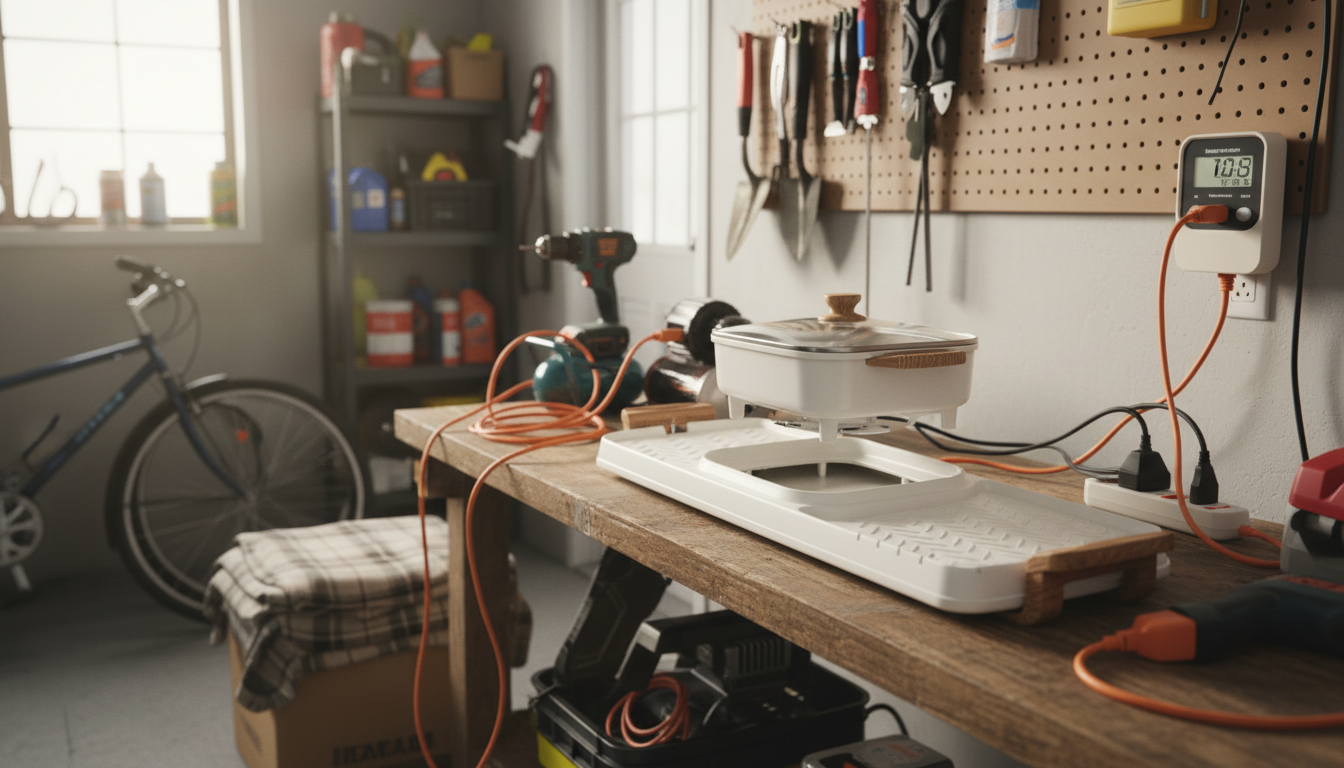
Use this simple formula: (watts ÷ 1,000) × hours used × your $/kWh rate. For a more precise number, plug the grill into a kill-a-watt meter and track a full meal. That captures cycling behavior and any added power from features like dual-zone heating.
For more on choosing and using an indoor Korean-style hot pot BBQ setup, visit this guide to smokeless electric hot pot BBQ grills.
FAQ
Do electric hot pot grills need a dedicated outlet?
Most don’t, but they can draw 10–15 amps at peak. Plug directly into a standard wall outlet when possible and avoid sharing a power strip with other high-wattage appliances.
















Leave a comment