Clean Mold Off Outdoor Cushion Covers: Easy Step Guide
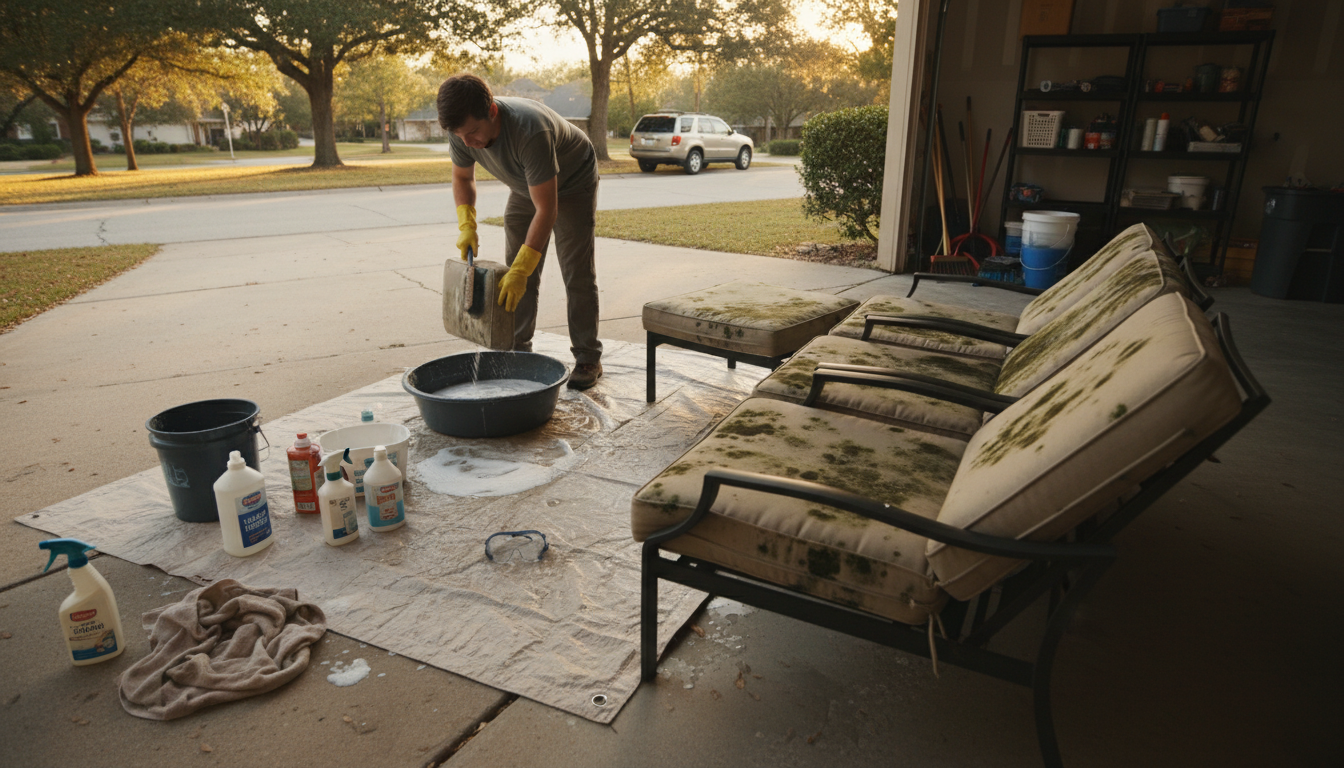
How to clean outdoor furniture cushions with mold
Mold on outdoor cushions is common after humid weather, shade, or storing cushions before they’re fully dry. The key is to remove loose growth safely, wash with a fabric-appropriate solution, and dry completely so it doesn’t return.
Step 1: Take cushions outside and dry-brush first
Carry the cushions outdoors to keep spores from spreading inside. If the cushions are damp, let them sit in the sun for a bit so the mold dries. Then use a soft brush to gently loosen and remove surface mold. Avoid aggressive scrubbing that can push mold deeper into the fabric.
Step 2: Check the care tag and test a hidden spot
Different outdoor fabrics handle cleaners differently. Before using any solution, check the cushion’s care instructions and test your cleaner on a small, less-visible area to confirm it won’t fade color or affect water repellency.
Step 3: Wash with a mild cleaner and rinse thoroughly
Mix a gentle soap solution (such as mild dish soap in lukewarm water). Apply with a sponge or soft brush and work across the entire panel—not just the visible mold—so you don’t create tide marks. Let it dwell for a few minutes, then rinse completely until water runs clear. Leftover soap can attract dirt and hold moisture.
Step 4: Treat remaining staining (only as needed)
If discoloration remains after washing, spot-treat carefully with an outdoor-fabric-safe mildew remover appropriate for your material. Follow product directions closely, and rinse again. When in doubt, stick to gentler methods first to protect the fabric.
Step 5: Dry fast and fully to prevent regrowth
Prop cushions on edge so air can circulate, and dry in direct sun when possible. Don’t store or cover cushions until they’re completely dry—trapped moisture is what lets mold come back.
For fabric-specific guidance on cleaning, protecting, and preventing mildew long-term, visit this outdoor fabric care guide.
FAQ
How do you keep outdoor cushions from getting moldy again?
Keep cushions as dry as possible: bring them in during heavy rain, allow full drying before storage, and improve airflow by storing them off the ground. Regular light cleaning and occasional re-application of a fabric protectant (if compatible with your cushion material) also helps.
















Leave a comment