Cat Feeding Routine Changes: How Long Until They Adjust?
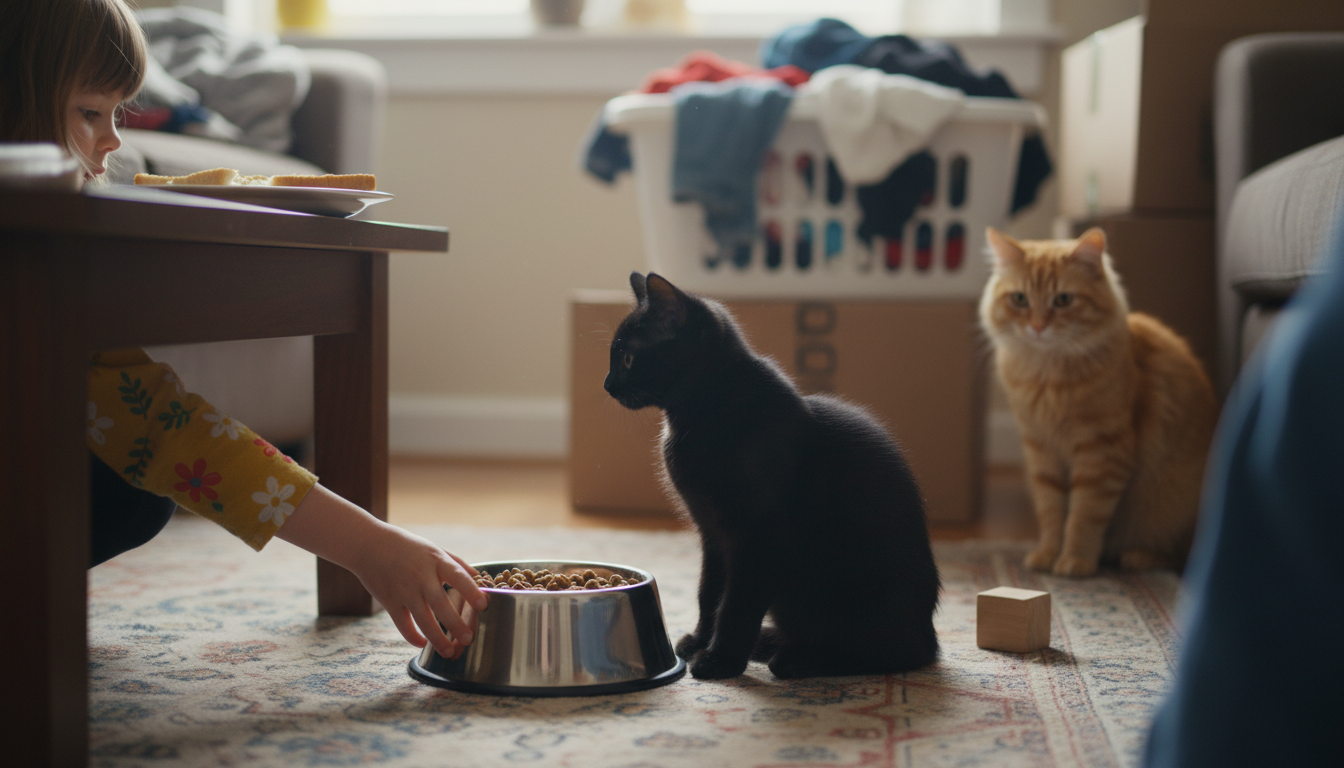
How long does it take for a cat to get used to a new feeding routine?
Answer
Most cats start adjusting to a new feeding routine within about 3 to 14 days, but it can take closer to 3 to 4 weeks for the schedule to feel truly “normal,” especially if meal times, food type, or portion sizes changed a lot. Cats thrive on predictability, so consistent timing and a calm setup usually speed things up.
During the first few days, it’s common to see increased meowing at the old feeding time, waiting by the bowl, or acting extra focused on the kitchen. That behavior often fades once your cat learns the new pattern reliably results in food. If you’re switching foods at the same time as the schedule, the adjustment can take longer because the digestive system needs time to adapt.
To help the transition, keep meal times consistent (even on weekends), measure portions, and pick one feeding spot. If you’re moving from free-feeding to set meals, consider starting with two to three predictable meals per day and gradually tightening the schedule. If you’re changing the food itself, a slow transition (mixing old and new over several days) can reduce stomach upset and make the new routine easier to accept.
If your cat refuses food for more than 24 hours, vomits repeatedly, has diarrhea that lasts more than a day, or seems lethargic, contact your veterinarian. For a practical breakdown of meal timing, portioning, and common schedule fixes, see this guide: new kitten feeding guide, food schedule & fixes.
For Cat Feeding Routine Changes: How Long Until They Adjust?, the best answer depends on fit, material, care instructions, and how the product will be used day to day.
FAQ
Should I free-feed my cat or use set meal times?
Set meal times work well for many cats because they support routine and make it easier to monitor appetite and portions. Free-feeding may be fine for some cats, but it can make weight control and early health warning signs harder to track.
















Leave a comment