Authentic Dating Profile Blueprint: Photos, Prompts, Messages
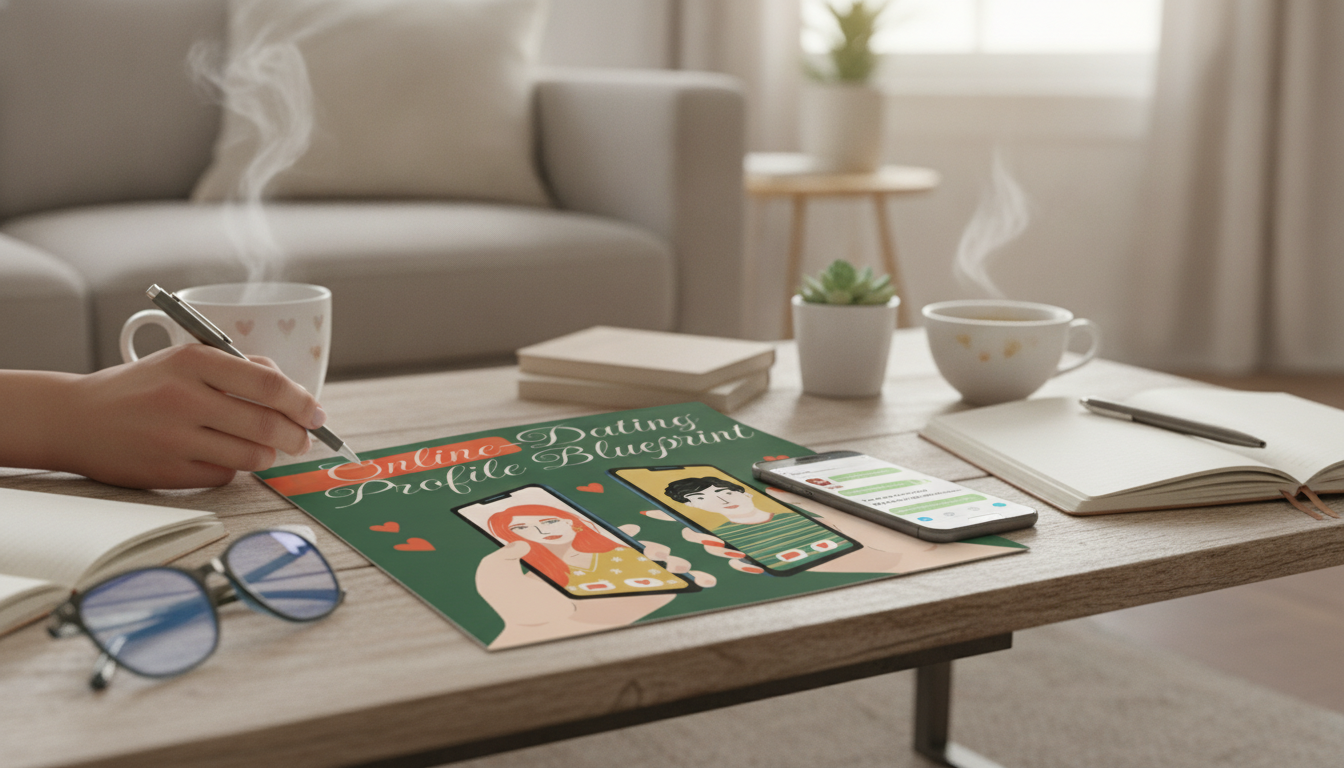
Online-Dating Profile Blueprint: Build an Authentic Profile That Filters for Better Matches
A strong dating profile and a confident first message do more than increase replies—they filter for the right people and reduce wasted swipes. A printable blueprint makes that process easier by turning vague answers and mixed signals into clear, authentic self-presentation: photos that match your real life, prompts that sound like your voice, boundaries that protect your time, and message templates that feel natural (not copy-pasted).
What “authentic” looks like on dating apps
On apps, authenticity isn’t “sharing everything.” It’s being specific enough that the right people can recognize you—and the wrong people can self-select out. Concrete details, a consistent tone, and clear intent (your dating style, pace, and values) do most of the heavy lifting.
Attraction and clarity can coexist. Personality-forward profiles can still be light, playful, and inviting while quietly preventing mismatches. What tends to backfire are “inauthentic” traps: generic hobby lists (“travel, food, Netflix”), forced humor that doesn’t match your real voice, curated personas that feel like a brand, or bios that try to appeal to everyone at once.
A simple standard: if a close friend wouldn’t recognize your voice—your word choices, your rhythm, your vibe—your profile likely needs grounding.
The profile elements that most affect match quality
Photos: clarity + context (not perfection)
Match quality improves when photos remove uncertainty. A balanced set typically includes a clear face photo, a full-body or contextual shot, lifestyle proof (something you actually do), and a bit of social proof—without looking overly produced.
Prompts/bio: fewer claims, more evidence
Instead of “I’m adventurous,” show a tiny scene: a favorite neighborhood loop, a museum you always detour into, or how you spend a Sunday morning. Micro-stories and preferences give someone something real to respond to.
Signals: what you’re inviting (and filtering)
Good profiles quietly answer: Are you inviting banter, planning dates, shared activities, or slow-burn conversation? And what’s being filtered out—like incompatible schedules, lifestyle gaps, or mismatched relationship goals.
Consistency: your vibe should line up
If your photos scream “backpacking every weekend” but your text says you’re a proud homebody, people don’t know which version to believe. Consistency builds trust fast.
Printable blueprint workflow (fast, practical, repeatable)
A printable system works because it reduces decision fatigue. You’re not reinventing yourself—you’re organizing yourself. Here’s a repeatable flow that can be done in one sitting and refined after real conversations:
- Step 1: Define the “right-fit” snapshot (values, weekly rhythm, dealbreakers, and the kind of connection you want).
- Step 2: Choose 1–2 profile themes (examples: “curious city explorer,” “low-key foodie,” “outdoors weekends”).
- Step 3: Build prompts that show—not tell—using short scenes and preferences that spark easy follow-ups.
- Step 4: Assemble a photo set that supports the themes and removes ambiguity.
- Step 5: Create a first-message playbook with openers tied to their profile plus a clean next-step.
- Step 6: Review for tone, clarity, and compatibility filters; then iterate after real conversations.
Blueprint pages and what each one produces
| Printable page/module | Goal | Outcome you can use immediately |
|---|---|---|
| Profile voice + intent worksheet | Lock in tone and direction | A consistent “through-line” for prompts and messages |
| Photo checklist + selection guide | Remove guesswork from choosing pictures | A complete photo lineup with clear roles for each image |
| Prompt builder templates | Turn vague traits into memorable details | 2–4 polished prompts that invite specific replies |
| First-message formula sheets | Start conversations that don’t fizzle | Reusable openers tailored to profiles and shared interests |
| Match-quality filter prompts | Reduce mismatches early | Questions and boundaries that keep dating aligned with goals |
Photos that feel real (and still look great)
“Real” photos still benefit from good basics: clean lighting, a steady shot, and an expression that looks like you on a good day—not you forcing a look.
- Lead photo: clear face, natural lighting, relaxed expression. Skip heavy filters and distant shots.
- Variety over perfection: mix a close-up, a mid-shot, and a full-body or contextual photo.
- Lifestyle proof: include one image that reflects an actual routine—cooking, hiking, a museum visit, or a casual night out.
- Social photo rule: one is enough, and it should never create confusion about who the profile belongs to.
- Avoid common mismatches: outdated photos, overly staged professional shoots, and “mystery angles” that create uncertainty.
Prompt answers that invite better conversations
First messages that sound natural and lead somewhere
For more on how people experience online dating (including common frustrations that clearer profiles can reduce), see Pew Research Center’s findings on online dating. For a broader look at what tends to shape attraction, the American Psychological Association’s overview is a helpful primer.
How the blueprint supports better matches over time
Printable guide details and best use cases
- Online-Dating Profile Blueprint (printable guide)
- How Much Driving Makes a Car Worth It – Practical Guide
FAQ
How long should a dating bio be?
Keep it short enough to read quickly but specific enough to feel like a real person—usually a few punchy lines or 2–4 prompts. Include concrete details and one clear invitation that makes it easy to respond.
What photos should be included to get better matches?
Use a clear lead photo, at least one full-body or contextual shot, and a couple lifestyle photos that reflect real interests. Avoid outdated images, heavy editing, and any shot that makes someone guess what you currently look like.
What’s a good first message that doesn’t feel generic?
Reference one specific detail from their profile, add a small related detail about yourself, and ask an easy question. Keep it friendly and short, and aim for a message that naturally opens the door to a real conversation.










Leave a comment