Calm Ways to Handle Passive-Aggressive Comments

How to Respond to Passive Aggression With Calm, Clear Boundaries
Passive-aggressive behavior can sound polite on the surface while delivering a jab underneath—creating confusion, resentment, and spiraling conflict. A steadier approach is to recognize the pattern early, regulate emotion in the moment, and respond with direct language that sets expectations without escalating. Below are practical scripts, boundary-setting tools, and ways to protect healthier relationships at home and at work.
What Passive Aggression Looks Like (and Why It’s So Draining)
Passive aggression often shows up as backhanded compliments, sarcasm, “fine” followed by withdrawal, deliberate procrastination, subtle sabotage, the silent treatment, chronic “forgetting,” or vague criticism. The hidden message is frequently about control, avoiding direct conflict, or fear of consequences for speaking openly. According to the American Psychological Association’s definition, it’s a pattern of indirect resistance and covert hostility—meaning the conflict is present, just disguised.
It escalates because it pressures you to guess intent, defend yourself, or over-explain. The conversation shifts away from the real issue (needs, expectations, consequences) and into a fog of tone-policing and mind-reading. A helpful reframe: respond to the impact and the request for clarity, not to the implied insult.
Pause First: Emotional Control That Prevents Escalation
When a remark lands badly, a brief pause can keep you from reacting to tone. Try a simple reset: breathe out longer than you breathe in, drop your shoulders, unclench your jaw, and slow your speech rate. Then name the feeling privately (annoyed, embarrassed, dismissed). Labeling the emotion reduces impulsive replies and helps you choose your next move.
Next, check the story: separate facts from interpretations (what was said vs. what it “must mean”). Finally, choose the goal—clarity, respect, and next steps—rather than “winning” or proving intent. If you want a deeper refresher on assertive communication, Mayo Clinic’s overview is a solid reference: Assertive communication.
Quick reset tools when a remark lands badly
| Situation cue | 10-second reset | What it prevents |
|---|---|---|
| A sarcastic comment in a meeting | Sip water, breathe out slowly, wait 2 beats before speaking | Snapping back or sounding defensive |
| A partner’s “Whatever you want” | Ask one clarifying question; keep voice neutral | Mind-reading and circular arguing |
| A coworker “forgets” a task again | Write down facts; decide the boundary before responding | Emotional dumping or vague complaints |
| A family member gives a backhanded compliment | Label impact internally; respond to content, not sting | Escalating into personal attacks |
How to Respond in the Moment: Clear, Non-Combative Scripts
Your best scripts are short, calm, and specific. You’re aiming to bring the conversation into daylight: meaning, request, and next step.
- Use curiosity + clarity: “I’m not sure I’m understanding—what do you mean by that?”
- Reflect impact without accusation: “That came across as critical. Is that what you intended?”
- Ask for the direct request: “What would you like me to do differently?”
- Hold the line on respect: “I’m open to feedback, but not sarcasm. Let’s be direct.”
- If they deny intent, return to behavior: “Okay. Going forward, please tell me plainly if something isn’t working.”
If they respond with more vagueness, repeat the same structure: one sentence of impact + one sentence asking for the direct request. Repetition is powerful because it stops you from chasing the bait.
Boundaries That Work: Specific, Behavioral, and Enforceable
Vague boundaries (“Don’t be rude”) invite debate. Strong boundaries focus on observable actions and what you’ll do next. Think: trigger, boundary, consequence.
- Behavior boundary: “If sarcasm starts, I’ll pause the conversation and we can try again later.”
- Work consequence: “If the deadline is missed, I’ll reassign the task and document the change.”
- Time boundary: “I can talk about this at 6:30, not while we’re rushing out the door.”
- Topic boundary: “I’m not discussing my finances at family dinner.”
Follow-through matters. Inconsistency teaches the other person that pressure works—so keep the consequence simple and realistic.
Workplace Situations: Documentation, Directness, and Professional Tone
Close Relationships: Repair, Accountability, and Healthier Patterns
If the cycle repeats, name it without blame: “When things feel tense, we both shut down. Can we try saying the issue in one sentence?” Consider agreeing on basic conflict rules: no sarcasm, no silent treatment, time-outs with a return time, and one actionable request each. If there’s repeated contempt, manipulation, or fear, getting outside support can help. For an overview of therapy options, see the NHS guide: Talking therapies (counselling and CBT).
When to Disengage: Recognizing What You Can’t Fix
Practical Support for Building These Skills Consistently
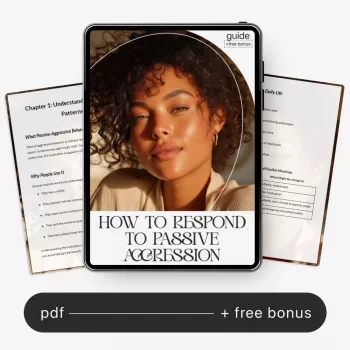
For step-by-step scripts and exercises, consider How to Respond to Passive Aggression – Digital Guide | Practical Ways to Handle Passive-Aggressive Behavior | Communication Skills for Boundaries, Emotional Control & Healthier Relationships. If you’re also building more intentional life routines that reduce stress-reactivity, you may like How Much Driving Makes a Car Worth It – Practical Guide to Decide How Often Do I Need to Drive to Justify a Car as a decision-making framework for simplifying commitments.
FAQ
What should be said to someone who is being passive-aggressive?
Try short, direct scripts: “What do you mean by that?” “Can you say that directly?” or “What would you like me to do differently?” Keep your tone neutral and let the question do the work.
How can passive aggression be handled without starting a fight?
Pause to regulate your reaction, then respond to facts and impact in a calm voice. Set a behavioral boundary with a clear next step, like “I’m open to feedback, but not sarcasm—please tell me directly what you need.”
Is ignoring passive-aggressive comments effective?
Selective ignoring can be useful for one-off, low-stakes remarks when you don’t want to reward the behavior. If it’s a pattern, addressing it with clear expectations and consistent follow-through is usually more effective than letting it build.















Leave a comment