Healthy vs Unhealthy Relationships: Heart Check Guide

Heart Check: A Clear Guide to Healthy vs Unhealthy Relationships
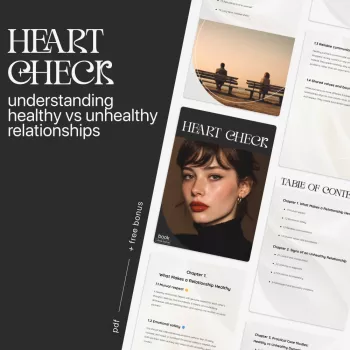
Relationship patterns can feel confusing when care, conflict, and commitment get tangled together. Heart Check is a self-awareness and relationship clarity workbook designed to help spot what’s supportive, what’s harmful, and what needs boundaries—using practical prompts, reflection exercises, and straightforward comparisons.
Why “healthy vs unhealthy” can be hard to spot
Many relationships don’t look “all good” or “all bad” on the surface. Confusion usually comes from patterns that alternate comfort with harm, making it harder to trust your own read on what’s happening.
- Mixed signals can normalize unhealthy dynamics (kindness followed by blame, apologies without change).
- Stress, attachment patterns, and past experiences can blur what “normal” feels like—especially if you grew up around conflict, criticism, or avoidance.
- Genuine connection can coexist with harmful behaviors that still require boundaries, outside support, or distance.
- Clarity improves when behaviors are tracked over time rather than judged from one incident.
For a research-based overview of relationship health and common dynamics, the American Psychological Association (APA) on Healthy Relationships is a solid starting point.
Core signs of a healthy relationship
Healthy doesn’t mean conflict-free. It means conflict can happen without fear, humiliation, or punishment—and repair actually repairs.
- Respect: differences are allowed without ridicule, intimidation, or punishment.
- Trust and consistency: words align with actions; repair happens with follow-through.
- Boundaries: each person can say no, ask for space, and keep friendships, interests, and privacy.
- Communication: issues can be discussed without fear; accountability is shared.
- Support: encouragement for goals, wellbeing, and growth—without control.
Common unhealthy patterns to recognize early
Early recognition matters because many unhealthy patterns escalate over time—especially when the other person benefits from keeping you uncertain, isolated, or apologizing for things you didn’t do.
- Control: monitoring phone/social media, isolating from friends/family, or demanding constant access.
- Coercion and guilt: pressuring for sex, money, time, or decisions through fear, shame, or obligation.
- Chronic blame-shifting: problems are always one person’s fault; apologies are rare or performative.
- Volatility: frequent blowups, threats, silent treatment, or “walking on eggshells.”
- Disrespect disguised as honesty: insults, humiliation, or jealousy framed as love.
If you want a detailed breakdown of warning signs and what to do next, The National Domestic Violence Hotline’s warning signs resource is highly practical and clearly written.
Healthy vs unhealthy at a glance
Use the comparisons below as a starting point; patterns matter more than single moments. When safety is in question (threats, stalking, physical harm), prioritize support and safety planning.
| Area | Healthier pattern | Unhealthy pattern |
|---|---|---|
| Conflict | Discusses issues, takes breaks, returns to repair | Escalates, threatens, stonewalls, refuses repair |
| Boundaries | Respects “no” and personal time | Punishes boundaries, pressures, or ignores limits |
| Independence | Encourages friends, hobbies, and goals | Isolates, monitors, or sabotages independence |
| Accountability | Owns harm and changes behavior | Blames, excuses, repeats without change |
| Trust | Builds trust through consistency | Demands trust while acting inconsistently or deceitfully |
A simple self-check process for relationship clarity
When you’re overwhelmed, it helps to move from “What does this mean?” to “What actually happened—and what does it do to me?” This five-step check is designed to reduce self-doubt and sharpen boundaries.
- Name the behavior: describe what happened without interpretation (who said/did what, when, how often).
- Note impact: identify emotional, physical, financial, and social effects (sleep, anxiety, isolation, confidence).
- Look for pattern: track frequency, triggers, and whether repair includes lasting change.
- Set one clear boundary: state the limit, consequence, and what follow-through looks like.
- Get outside perspective: talk with a trusted person or professional when confusion or fear is persistent.
For broader context on relationship violence and health impacts, the CDC’s Intimate Partner Violence overview offers clear definitions and data.
Using Heart Check as a workbook (without getting overwhelmed)
The fastest way to burn out is trying to solve the whole relationship in one sitting. A steadier approach is small, consistent reflection that turns vague feelings into trackable facts.
Helpful tools available now
If you want structured prompts and side-by-side comparisons, the Heart Check relationship clarity workbook is designed for practical, repeatable check-ins—especially when you’re stuck between “maybe it’s fine” and “something feels off.”
- How Much Driving Makes a Car Worth It – Practical Guide (a structured framework for decisions when emotions and logistics collide).
- Elegant Ebony Genuine Leather Rocking Chair (a comfortable, grounded space can make reflection, journaling, and boundary planning easier to sustain).
When it’s time to seek help
FAQ
Can a relationship be loving and still unhealthy?
Yes. Affection can coexist with harmful patterns, especially when the warmth is followed by control, blame, or volatility. The most reliable indicators are consistency, respect, safety, and whether accountability leads to real behavior change.
What’s the difference between a boundary and an ultimatum?
A boundary is a limit you set to protect your wellbeing with follow-through you control (for example: “If yelling starts, I’m ending the conversation and leaving the room”). An ultimatum tries to control the other person’s choices (for example: “If you ever disagree with me again, I’ll punish you”), rather than stating what you will do to keep yourself safe.
How can someone tell if they’re being controlled?
Common signs include monitoring your phone or social media, isolating you from friends/family, restricting money, jealousy framed as “care,” punishing you for saying no, and escalating when you pursue independence. Control often looks like “concern” at first, but it consistently reduces your freedom over time.















Leave a comment