Find Your Decor Style: Quiz + Checklist for Every Room
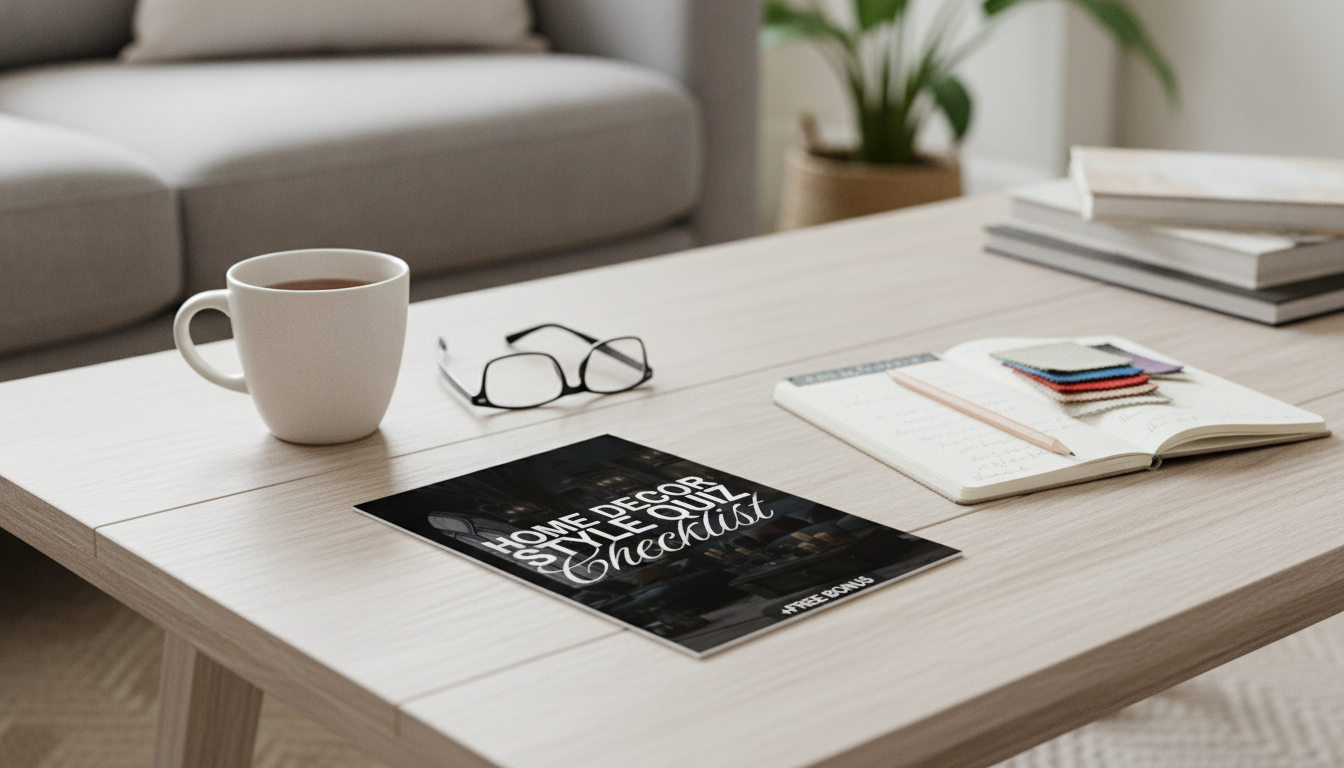
Find Your Home Decor Style and Start Decorating With Confidence
A clear personal style makes decorating easier: decisions come faster, purchases feel intentional, and rooms look cohesive over time. This guide shows a practical way to identify a decor direction, translate it into colors and materials, and build a simple plan for refreshing any space—starting with a printable quiz and checklist that turns inspiration into a usable roadmap. For more guidance, see Free Downloads – Interior Design ebooks on Home Decorating.
Why knowing your style changes everything
When a room feels “off,” it’s often not because any single item is wrong—it’s because the pieces don’t share a common thread. Defining your style gives you that thread, so your home improves steadily instead of swinging from trend to trend.
- Reduces overwhelm by narrowing choices to a consistent set of shapes, colors, and finishes
- Helps avoid impulse buys that don’t work together once they get home
- Creates a repeatable “filter” for furniture, art, lighting, and textiles
- Makes it easier to mix styles intentionally instead of accidentally
- Supports budget-friendly upgrades by prioritizing the biggest impact changes first
If you want a helpful overview of established style categories, Architectural Digest’s guide is a solid reference: Architectural Digest — Interior Design Styles 101.
A quick style snapshot: common decor directions
Most homes aren’t “one style forever.” The goal is to find your default setting—what you repeatedly gravitate toward—then use that as the backbone.
- Modern: clean lines, low ornamentation, strong contrast, statement lighting
- Minimal: fewer items, calm palettes, high function, strong negative space
- Scandinavian: light woods, soft neutrals, cozy textures, simple silhouettes
- Boho: layered patterns, global accents, plants, relaxed mix-and-match
- Farmhouse: warm neutrals, rustic woods, vintage touches, approachable comfort
- Traditional: classic shapes, symmetry, rich textures, refined details
- Industrial: metal + wood, utilitarian forms, exposed textures, moody tones
- Coastal: airy color palettes, natural fibers, light-reflective finishes
Style clues to look for in rooms you already love
| What you notice first | Likely style leaning | Simple way to test it at home |
|---|---|---|
| White walls and minimal accessories | Minimal / Modern | Clear one surface and keep only 1–2 objects |
| Light wood + cozy textiles | Scandinavian | Add a wool throw and a pale wood tray |
| Pattern mixing and collected decor | Boho | Layer a patterned cushion with a textured solid |
| Black metal, concrete, raw wood | Industrial | Swap one lamp for a black metal fixture |
| Slipcovered seating and warm neutrals | Farmhouse | Add a neutral linen pillow and a rustic frame |
| Symmetry and classic silhouettes | Traditional | Pair matching lamps or frames to balance a wall |
Use a quiz + checklist to turn inspiration into a plan
Saving photos is easy; acting on them is harder. A quiz and checklist bridge that gap by converting “vibes” into decisions you can repeat in every room.
- Start with a style quiz to spot repeat preferences (color temperature, contrast, clutter tolerance, shapes, and materials)
- Use a checklist to translate the result into room decisions: walls, floors, furniture, lighting, textiles, decor, and storage
- Build a “must-have / nice-to-have” list to protect the budget while keeping the look cohesive
- Keep a one-page style summary to reference before purchases and while browsing online
- Print the pages for quick notes during shopping trips or while rearranging at home
For color direction, it helps to use a consistent system for describing undertones and saturation. Pantone’s color guidance is a practical way to understand why two “whites” can clash: Pantone — Color Systems and Color Guidance.
What’s inside the Home Decor Style Quiz Checklist digital download
If you want a ready-to-use framework, the Home Decor Style Quiz Checklist digital download is designed to be fast, practical, and easy to revisit when your home evolves.
- A printable quiz to identify a primary style direction and compatible secondary influences
- A room-by-room checklist to keep choices consistent across living areas, bedrooms, and entryways
- Guided prompts for color palettes, materials, textures, and repeatable decor “rules” so decisions get simpler over time
- A practical format for quick reference: download, print, and revisit whenever a room changes
- Designed for fast wins: clear next steps instead of endless scrolling for ideas
Digital download at a glance
| Detail | What it means for decorating |
|---|---|
| Format | Printable PDF-style guide for easy use on screen or on paper |
| Use case | Clarify style, then apply a checklist to decisions in each room |
| Best for | Renters, first-time decorators, and anyone refreshing a space on a budget |
| Time to complete | Often 10–20 minutes to get a clear direction, then use as a reference |
How to apply your results to a real room (simple workflow)
Want a simple way to choose what deserves attention first? The idea of “visual hierarchy” explains why one or two intentional focal points can make a whole space feel designed: Nielsen Norman Group — Visual Hierarchy.
Mixing styles without making the room feel random
For example, a strong statement seat can act as your “dominant” signal. The Elegant Ebony Genuine Leather Rocking Chair can anchor a modern, industrial, or even updated traditional space depending on what you pair it with (matte black accents for industrial, warm woods for modern-organic, or classic frames for traditional).
Printable checklist ideas for budget-friendly upgrades
FAQ
How does a decor style quiz help if preferences feel mixed?
Most homes blend influences; a quiz helps identify your dominant direction and the secondary styles that naturally pair with it. The checklist then sets boundaries—palette, materials, and shapes—so your mix feels cohesive instead of accidental.
Is this printable guide useful for renters or small spaces?
Yes. It emphasizes movable changes like textiles, lighting, layout, decor, storage, and repeatable “rules,” so you can get a finished look without painting or renovations.
What should be purchased first after getting a style result?
Start with one anchor item and a simple palette/material plan. Then prioritize lighting and textiles before smaller decor to avoid mismatched impulse buys.








Leave a comment