Self-Love & Worthiness Meditations: Audio for Calm
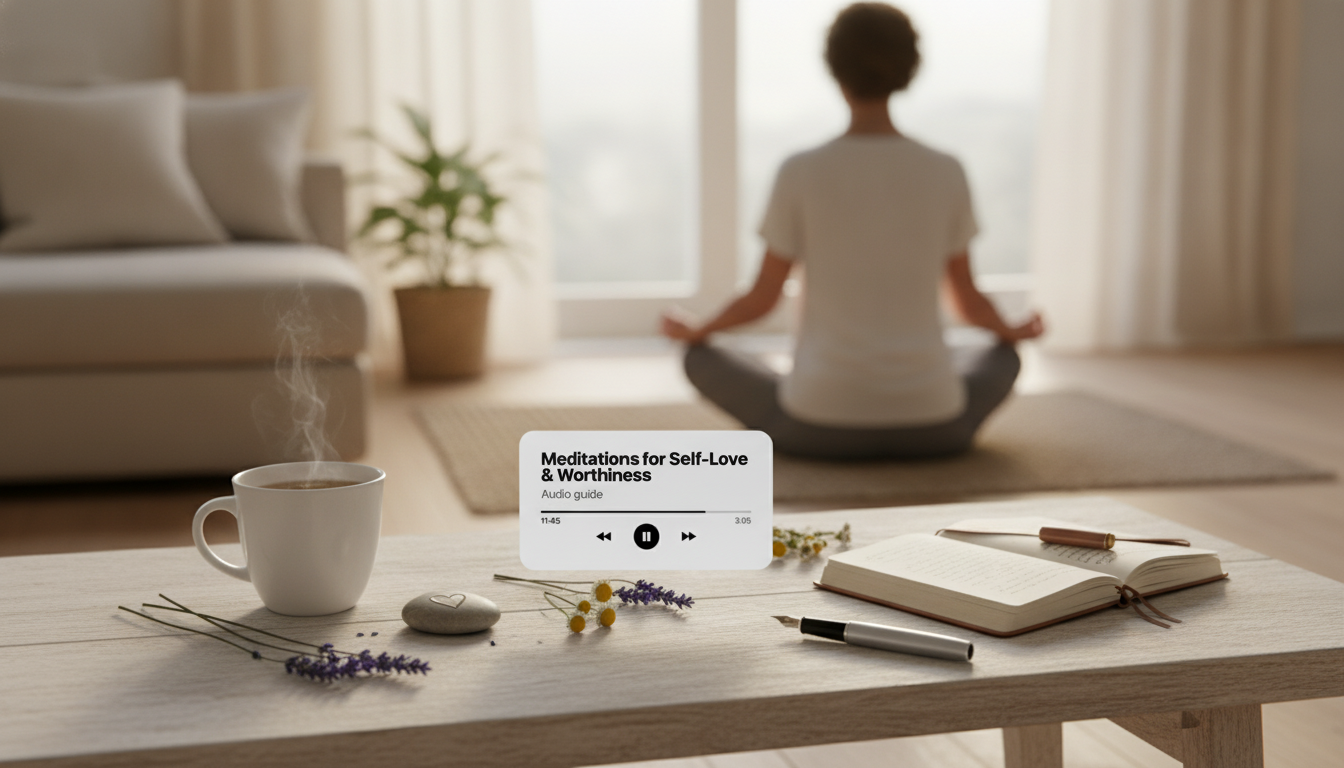
Meditations for Self-Love & Worthiness: Guided Audio Practices for Confidence, Calm, and Inner Healing
Self-love and a sense of worthiness often feel less like a single breakthrough and more like a trainable skill—built through repetition, safety in the body, and kinder self-talk. Guided meditations, mindfulness, and affirmations can support that process by calming the nervous system, softening harsh inner narratives, and making confidence feel more accessible in everyday moments.
Research and clinical resources increasingly highlight mindfulness as a practical tool for stress and emotional regulation. For a grounded overview of benefits and safety considerations, see the National Center for Complementary and Integrative Health (NCCIH) and the American Psychological Association (APA).
What “self-love” and “worthiness” look like in real life
Self-love isn’t nonstop positivity or self-improvement pressure. It’s the steady ability to treat yourself like someone you’re responsible for caring for—especially when you’re tired, stressed, or not performing at your best.
- A steadier baseline of respect toward personal needs (sleep, boundaries, rest) rather than constant self-negotiation
- Less dependence on external validation to feel “enough,” even when feedback is mixed or absent
- More self-trust: making choices without extended rumination, perfectionism, or fear of disappointing others
- Greater emotional flexibility—feeling difficult emotions without turning them into self-judgment
Over time, these shifts tend to show up in small moments: pausing before overexplaining, choosing a kinder inner tone after a mistake, or letting yourself rest without “earning” it first.
Why guided meditations and affirmations can help (and when they feel hard)
Many people don’t struggle with knowing what’s supportive—they struggle with doing it consistently when the mind is loud or the body feels keyed up. Guided audio helps by reducing friction and giving the brain one clear thread to follow.
- Mindfulness practices can reduce reactivity by training attention to notice thoughts and sensations without immediately believing them
- Guided formats lower the “activation energy” for practice—helpful when motivation is low or the mind is busy
- Affirmations can support new self-beliefs, but often work best when paired with grounding (breath, body scanning) so they feel safe rather than forced
- If affirmations trigger resistance (“this isn’t true”), try “bridge phrases” such as: “I’m learning to…”, “It’s possible that…”, or “I’m open to believing…”
If certain phrases feel too big, scale them down. A believable statement that lands in the body (“I’m allowed to take this one step at a time”) can be more effective than a grand declaration that sparks an inner argument.
A simple daily routine for confidence, calm, and inner healing
This routine is designed to be realistic on busy days. It prioritizes nervous-system settling first, then gentle mindset work, then a small action that reinforces self-respect.
- 2 minutes: settle the body (longer exhales, gentle shoulder drop, unclench jaw)
- 7–10 minutes: guided meditation focused on safety, compassion, or worthiness themes
- 1 minute: affirmation repetition with one hand on the chest (pair words with a calming cue)
- 30 seconds: choose one small action aligned with self-respect (hydrate, step outside, send a boundary-setting message)
- Consistency matters more than duration; short practices done often tend to shape habits faster than occasional long sessions
Quick practice menu (choose one per day)
| Goal | Practice | When it helps most | Example affirmation |
|---|---|---|---|
| Calm | Breath + body scan | Racing mind, overwhelm | “In this moment, I am safe enough.” |
| Confidence | Future-self visualization | Before a conversation or presentation | “I can show up and stay present.” |
| Worthiness | Self-compassion meditation | After criticism, comparison, or rejection | “I am worthy of care and respect.” |
| Inner healing | Inner-child soothing practice | Old triggers, shame spirals | “I can offer myself kindness now.” |
Common blocks—and how to work with them gently
It’s normal for self-love practices to surface discomfort at first—especially if your system learned to equate self-kindness with risk (judgment, disappointment, or rejection). These adjustments can help you stay steady.
What to look for in an audio course for self-love and worthiness
Audio course option: Meditations for Self-Love & Worthiness
If a structured, repeatable approach is helpful, the Meditations for Self-Love & Worthiness audio course is designed around guided meditations, affirmations, and mindfulness practices that support confidence, calm, and inner healing.
Simple “set the scene” add-ons (optional)
- Elegant Ebony Genuine Leather Rocking Chair for a consistent, cozy seat you associate with slowing down
- 200/2400mm High-Power Astronomical Telescope for Stargazing Enthusiasts if mindful stargazing helps you decompress and reconnect with perspective
At-a-glance details
| Item | Details |
|---|---|
| Title | Meditations for Self-Love & Worthiness | Audio Course | Guided Meditations, Affirmations & Mindfulness for Confidence, Calm, and Inner Healing |
| Price | $26.99 USD |
| Availability | In stock |
| Format | Audio course |
FAQ
How often should guided meditations be done to build self-love and worthiness?
A short daily practice (about 5–15 minutes) tends to work best, especially if you repeat the same track for 1–2 weeks. Pair the session with one small self-respecting action to help the benefits show up in real life.
What if affirmations feel fake or trigger resistance?
Start with grounding (slow exhales, hand on chest) and use “bridge” phrases like “I’m learning to…” or “I’m open to believing…”. Choose one statement that feels believable today and build gradually as your body learns safety with the new message.
Can mindfulness help with anxiety and low confidence at the same time?
Yes—calming the nervous system can reduce rumination and reactivity, which makes confident behavior easier to access. A simple routine is a few minutes of breath-based settling, a short guided meditation, and one small action you’d take if you trusted yourself.
















Leave a comment